An uncomplicated, family-oriented man struggles to adjust to an ever-changing world, especially after suffering a loss. Even for the early 1900s, a less complicated time in many ways than now, Robert Grainier (Joel Edgerton) is a simple man.
An uncomplicated, family-oriented man struggles to adjust to an ever-changing world, especially after suffering a loss.
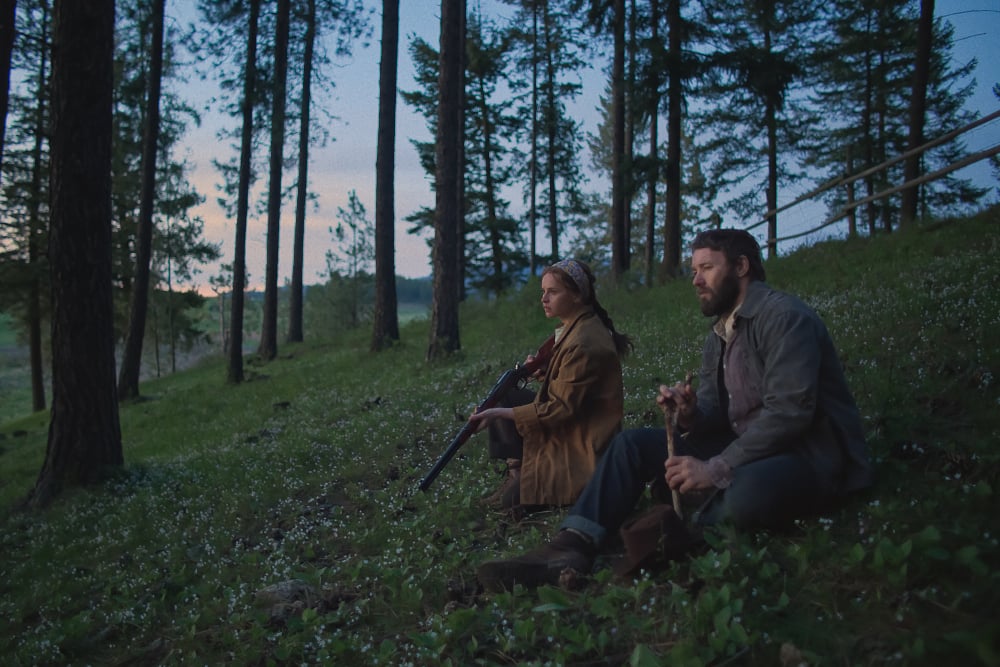
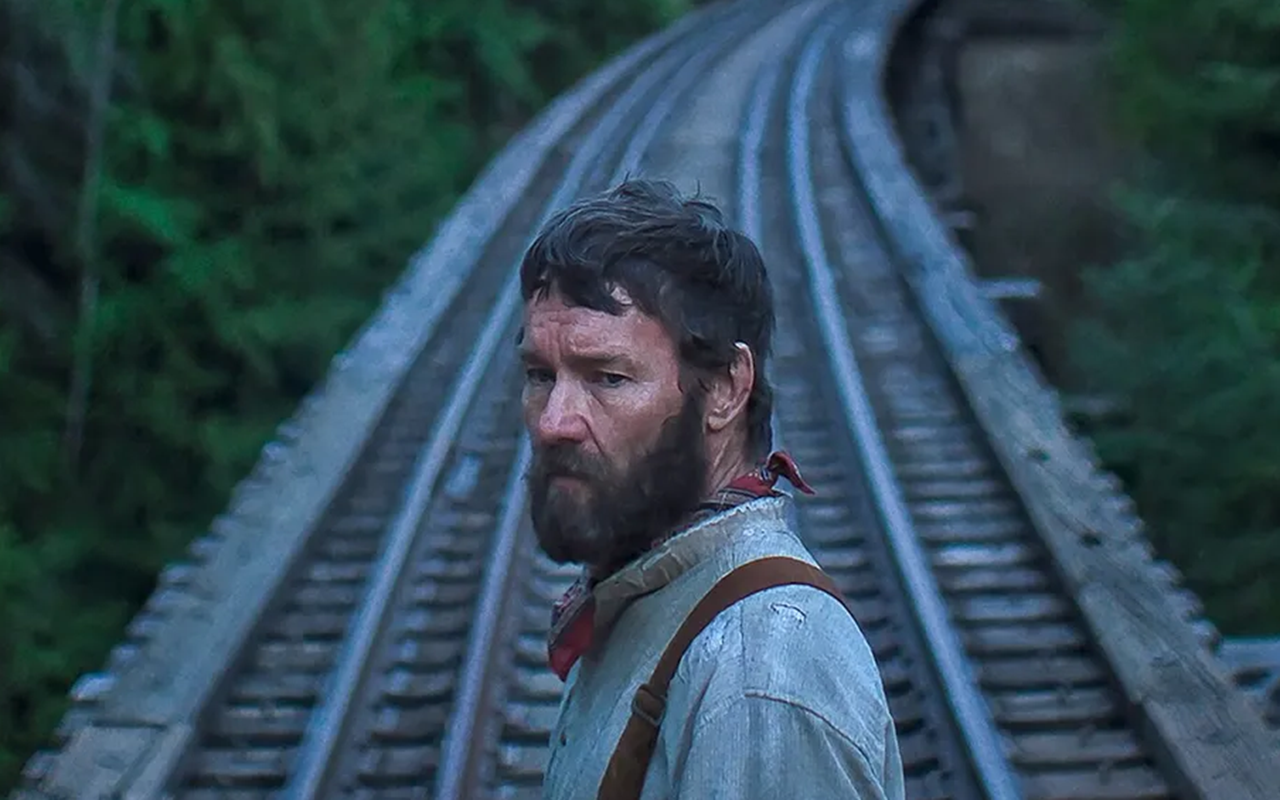
Even for the early 1900s, a less complicated time in many ways than now, Robert Grainier (Joel Edgerton) is a simple man. For one, he is almost a blank slate: the year of his birth and the identity of his parents are complete mysteries. And he is utterly content with his one acre of land and cabin in Idaho, doting on wife Gladys Olding (Felicity Jones), who is the one reason his life ever “made sense,” and baby daughter Kate. Unfortunately, the family needs money, so Robert leaves to log every season. Cutting down trees for the railway is physically demanding and can also be dangerous; sometimes trees fall at unexpected angles and kill sawyers. Robert often has the uneasy feeling that one is intended for him. Still, he soaks in the conversations of his interesting and strange coworkers. When the assignments end, Robert always happily returns to Gladys and marvels at little Kate’s development, but on one ride home, everything changes. Looking out his train window, he watches flames consume his home. In the blink of an eye, the life he has made vanishes forever.
The relationship of Robert and Gladys is one of equality. Because Robert is often absent, Gladys learns practical and stereotypically male skills like hunting and building traps, while Robert seems content with the slow rhythm of spending time with baby Kate when he’s home. Robert and Gladys hope to start a work partnership together, developing their own sawmill.
Robert almost makes friends with Claire, an independent and intelligent US Forest Service worker who is also alone, a difficult position for a woman in this time period. He admires her and treats her with respect.
An accepting person, Robert struggles to understand why racism happens. To him, Chinese laborers who work on the railroad with him are part of his temporary family like anyone else. When a Chinese co-worker is dragged off a job by other workers, Robert keeps asking what the man has done wrong, and tries to rescue him. The image of the Chinese man getting tossed over the side of the railroad bridge remains indelibly branded into Robert’s brain.
When an unknown Black man suddenly shoots one of Robert’s coworkers, Robert seems to accept the reason for the killing as reasonable—the Black man’s brother had been murdered, due to the color of his skin, by the coworker, so now everything is even. Later, Robert is befriended by a Native American.
Though there is not much action in this film which is based on a Denis Johnson novella, the slow pace offers time to admire the cinematography, as well as for contemplation. Everything seems luminous, whether positive or negative: a field of wildflowers, the full moon shining overhead, even the destructive fire, an eerily beautiful glow remorselessly consuming everything in its path. The film memorably begins with the image of boots nailed to a tree. The boots belonged to loggers killed by a falling tree, and were put there for remembrance. When Robert eventually returns, he sees the tree has grown around the boots and they have become one. Life is not always just, Train Dreams shows us, but it always goes on.