James Ramsey Ullman
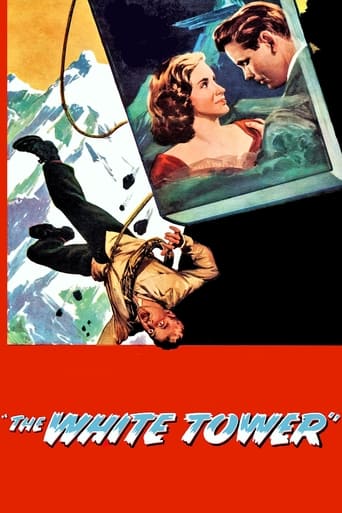
James Ramsey Ullman was born in New York City, the son of Alexander F. Ullman. As a boy, he attended Phillips Academy in Andover, Massachusetts. In 1929 he graduated from Princeton University and moved to Brooklyn to begin work in journalism as a newspaper reporter and feature writer. Ullman decided to try his hand at producing theater. This endeavor included the production of plays: "Faraway Horses", "Men in White", "Blind Alley", and "The Milky Way" among others of which he authored or co-authored a dozen. No production with which he was associated made it to Broadway. After a string of failed productions, Ullman decided to take a fresh look at career and traveled to the Amazon to relieve a growing fascination for travel and the lure of adventure. This experience inspired a travelogue narrative, The Other Side of the Mountain (1938), upon his return to America. Although he took a position with the Federal Theater, he began to devote himself to freelance writing and produced short stories and articles with the emphasis on the mountain climbing that he had taken up enthusiastically at a basic level as a hobby and a means to satisfying that adventure urge. Later in 1938 he climbed in the Canadian Rockies with friend J. Monroe Thorington, the American eye doctor and mountaineer who climbed extensively and wrote many guide books on the Canadian Rockies. He made a trip to the Tetons in Montana in 1941 and evidently climbed with guide and later Himalayan mountaineer Paul Petzoldt. This must have inspired his first book on the subject of mountain climbing, a history of the sport up to contemporary time, High Conquest (1941). This was the first of nine books for the publisher J.B. Lippincott. World War II intervened at this point, and Ullman was with the American Field Service from 1941 to 1943. True to one's life experiences he was inspired to write a first novel, The White Tower (1945). This dramatic rendering was about a post-World War II veteran American and casual mountaineer who climbs a fictitious unclimbed and killer peak that had taken the life of the father of his Swiss love interest. The story had a good plot and was the second of Ullman's books to make it to Hollywood, the first being a fictitious script about climbing the Matterhorn carved out of his history High Conquest and made into a 1947 film by that name. White Tower became a film vehicle for Glenn Ford, Alida Valli, and a great supporting cast in the film version also called The White Tower (1950)...