
Love, Regret, and Art: Pandemic Lessons from Station Eleven and The Real World
The three themes of lessons learned from HBO Max's Station Eleven are the same as the pandemic: love, regret, and art.
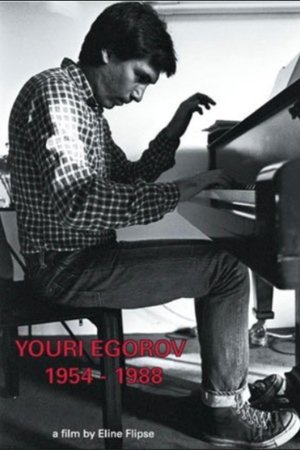


'In 1980, the VPRO asked me to make a short film about the Russian pianist Youri Egorov. It was allowed to last ten minutes and was broadcast in the then Extra section. We were 25, both born in May 1954. It was my second short film, and I was very nervous. Youri didn't like cameras and even less interviews. But he agreed, "because you were even shyer than he was," his friend Jan Brouwer told me later. In the years that followed, we would meet up sometimes, and on one such occasion, during the last concert of Vladimir Horowitz, I promised him that later, when we would both be 50, I would make 'a real' film about a long and interesting life. Youri smiled politely. When he died in 1988, I said goodbye to him at his home, and Jan Brouwer reminded me of my promise. So I made it after all, a film about a short and intense life.' - Eline Flipse
The three themes of lessons learned from HBO Max's Station Eleven are the same as the pandemic: love, regret, and art.
Hanna Bergholm's 'Hatching' shows us that the modern version of the cardboard world trope is social media.
'Playing with Fire' was clearly a film made for a kid or tween-ish audience. Keeping that in mind, I thought 'Playing with Fire' was alright, though it did portray some harmful stereotypes.
How closely does an actor need to resemble a character or historical figure in order to portray them on the Silver Screen? Seems to depend on color.
This film was filled with great plot points. Unfortunately, they all contradicted each other and clashed. Had the premise of Awake been more consistent and accurately portrayed the real world aspect, I think this could have been an extreme success.
Ultimately, Wicked is a story about the cost of being othered, the pain of being misnamed, and the quiet revolution of standing in your truth.