

Hitchcock's Subtextual Coding in 'Rope'
Hitchcock is no stranger to innuendo, as was common in that era, but there was something so sophisticated about his approach to 'Rope', and it starts in the first frame.
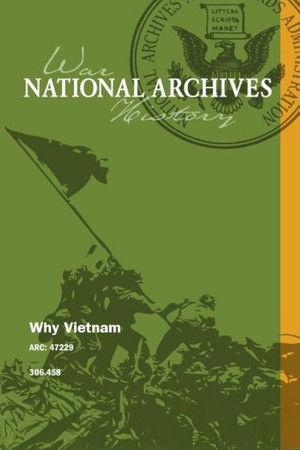


Released in 1965, "Why Vietnam?" was produced by the U.S. Department of Defense to aid public acceptance of the Vietnam War and to indoctrinate Vietnam-bound draftees. Structured in the rhetorical tradition of the "Why We Fight" films, it draws historical parallels to World War II, depicts U.S. military activity in Vietnam, and presents official interpretations of the conflict’s origins. Later criticism by historians highlighted the film’s selective use of evidence and its distortion of key historical facts, revelations that were further underscored by disclosures in the Pentagon Papers.
Hitchcock is no stranger to innuendo, as was common in that era, but there was something so sophisticated about his approach to 'Rope', and it starts in the first frame.
This is ambitious horror filmmaking, and in a lot of ways, I fully admire its ambitions. For me, the film’s sloppiness defines its overall quality.
Many have interpreted Maya Deren’s Meshes of the Afternoon as a dream sequence, but what if the repetitive scenes we are given are not dreams but, a time loop.
“Ad Astra” is a film that possesses similar beats to sci-fi classics, falling into the realm of cinematic hypnotism, and pulling us in with its mysteriously intoxicating identity.
KIMI is the main character of this film and as much as I wish it was Angela Childs played by Zoe Kravitz, it isn't. KIMI is a smart device that works not unlike Amazon's Alexa and Google's Nest assisting in anything from home purchases to music playing all under the guise of only activating when in use.
In 'Maestro,' we're left with an impression but not with an understanding of the main character.