

'You Are My Home' and Only Hope
A homeless girl faces depression and uncertainty during the holidays.
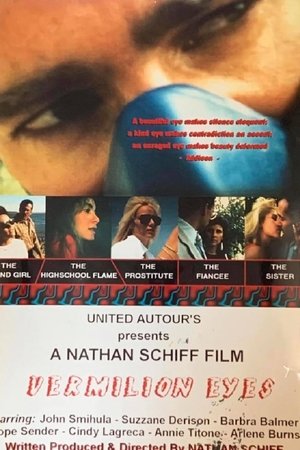


Obsessed with sex and death, a man is haunted by visions of beautiful women and brutal violence. He begins an odyssey into a world which, in his mind, transforms into an array of sexual fantasies and images of horrible accidents, suicide and murder. Like a bird of prey, he seeks out fatal automobile crashes and an assortment of other tragedies, which he records on film with a movie camera to view repeatedly, over and over. His dreams are a twisted amalgam of violent images juxtaposed with the tenderness of lovemaking. Overwhelmed by such fantasies, he soon becomes unable to distinguish reality from fantasy. He seeks to rid himself of these disturbing thoughts through love and by understanding the true nature of man. Instead, his emotional state falters, becoming more attuned with the notion of self-destruction. Morality becomes only a literary flourish, and dreams, now prophetic nightmares, the harbingers of complete and utter annihilation.
A homeless girl faces depression and uncertainty during the holidays.
As many of us know, Marvel Studios has taken an interest in women-led superhero films, but some of us are oblivious to the women behind the camera and pen.
A family adventure film that features Hawaiian culture with a representative director and a diverse cast.
A complete ranking of every Godzilla movie, including shared universe films.
Diana’s spirit has taken off, ‘No right, no wrong, no rules for me.’ And in that moment, as she runs on the screen, she gets it, her ‘Let It Go’ moment.
So with the recent (rightful) public apologies to Britney from comedians and media for trashing her image in the 2000s, perhaps some people should also give Crossroads the fair chance it deserves. It won't be everyone's cup of tea, and that is fine. Personally, I will take my girl Britney and her movie, over the next testosterone "Dude Flick" any day.