



Incluvie – Better diversity in movies.
Identity in film with Incluvie stamps, scores, reviews.

Incluvie – Better diversity in movies.
Explore identity in film with Incluvie stamps, scores, reviews, and insights.

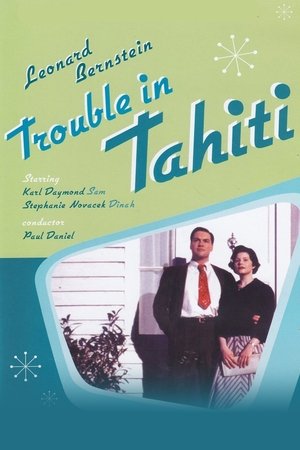
Trouble in Tahiti poster

Trouble in Tahiti (2001)

Leonard Bernstein was on his honeymoon in 1951 when he began composing his one-act opera, Trouble in Tahiti, a candid portrait of the troubled marriage of a young suburban couple. Written between his biggest Broadway successes— On the Town in 1944 and Candide and West Side Story in 1956 and 1957, respectively— Trouble in Tahiti draws upon popular songs styles to deliver an uncompromising critique of post-war American materialism. Beneath the couple's marital discord is a profound longing for love and intimacy. Their spiritual emptiness, in contrast to a veneer of happy consumerism, creates the heart of the drama and is emphasized by sudden stylistic shifts in the music.
- / 5
PopScore
Representation

Pictures and Videos


Incluvie Gala

Movie Information


Leonard Bernstein was on his honeymoon in 1951 when he began composing his one-act opera, Trouble in Tahiti, a candid portrait of the troubled marriage of a young suburban couple. Written between his biggest Broadway successes— On the Town in 1944 and Candide and West Side Story in 1956 and 1957, respectively— Trouble in Tahiti draws upon popular songs styles to deliver an uncompromising critique of post-war American materialism. Beneath the couple's marital discord is a profound longing for love and intimacy. Their spiritual emptiness, in contrast to a veneer of happy consumerism, creates the heart of the drama and is emphasized by sudden stylistic shifts in the music.

Rating:
Genre:Music, Drama, Comedy
Directed By:Tom Cairns
Written By:Leonard Bernstein
In Theaters:1/1/2001
Box Office:

Runtime:40 minutes
Studio:BBC, Opus Arte

Articles You May Like


The Burden of Female Intuition in Something Very Bad Is Going to Happen (2026)

“Trust your gut" is one of the most common pieces of advice you’ll receive during your lifetime. And as a person inclined to trust my intuition above all else, it’s the most common advice I find myself giving in real life and in my online socialising. But what happens when your gut is trying to warn you that something is seriously wrong without you being able to identify what triggered it in the first place? How can you act on a feeling or make it go away when you don’t have a clue about what could be wrong? How can you trust your intuition when you don’t know what makes it act out in the first place?

Simina Munteanu