





'Concerto For Humanity': The Eras We Live In
‘Concerto’ is esoteric at best, meant to satisfy the non-melanted’s sense of nostalgia. It is revisionist at worst, cherry-picking images that defy the true tapestry of the human condition.

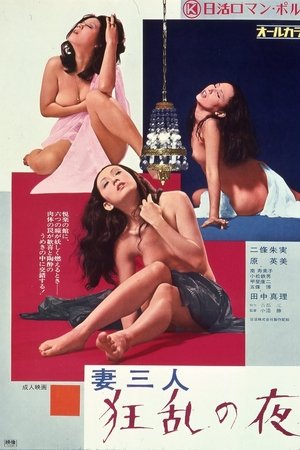


A suspense drama that comically depicts the intersection of love, sex, and money between men and women. One day, an affair with Taro Mishima's wife, Itsuko, and his subordinate Akizuki was discovered. Mishima blames them, but the relationship with hostess Noriko is pointed out. After all this, they divorce and each remarry. However, Mishima's carnal desire extended to a young housekeeper Kimiko. Noriko's son Takashi marries his former lover, Etsuko. They start a new life at the residence of Mishima. Two men and three women cross each other under one roof, and a storm of desire blows up.
‘Concerto’ is esoteric at best, meant to satisfy the non-melanted’s sense of nostalgia. It is revisionist at worst, cherry-picking images that defy the true tapestry of the human condition.
In all honesty, “Black and Blue” is a satisfying experience, complete with solid craftsmanship. With the help of cinematographer Dante Spinotti, Deon Taylor (the director) creates a murky, lived in atmosphere.
Many have interpreted Maya Deren’s Meshes of the Afternoon as a dream sequence, but what if the repetitive scenes we are given are not dreams but, a time loop.
A story of a magical dragon brings great representation for Chinese culture.
Years before Mexican director, Alfonso Cuaron, was winning Academy Awards for movies like Gravity (2013) and Roma(2018), he directed a small, intimate film about two best friends who decide to embark on an improvised road trip to spend time with an older, attractive woman who miraculously agrees to go with them. Y tu Mamá También is a deep journey into the raw sexuality and friendship of the young protagonists, as well as a subtle social and political commentary on Mexico at the time.