









“I Care A Lot” is Subversive Anti-Capitalist Camp Brilliance
A commentary on the exploitation of the elderly fueld by the inherent greed of capitalism.
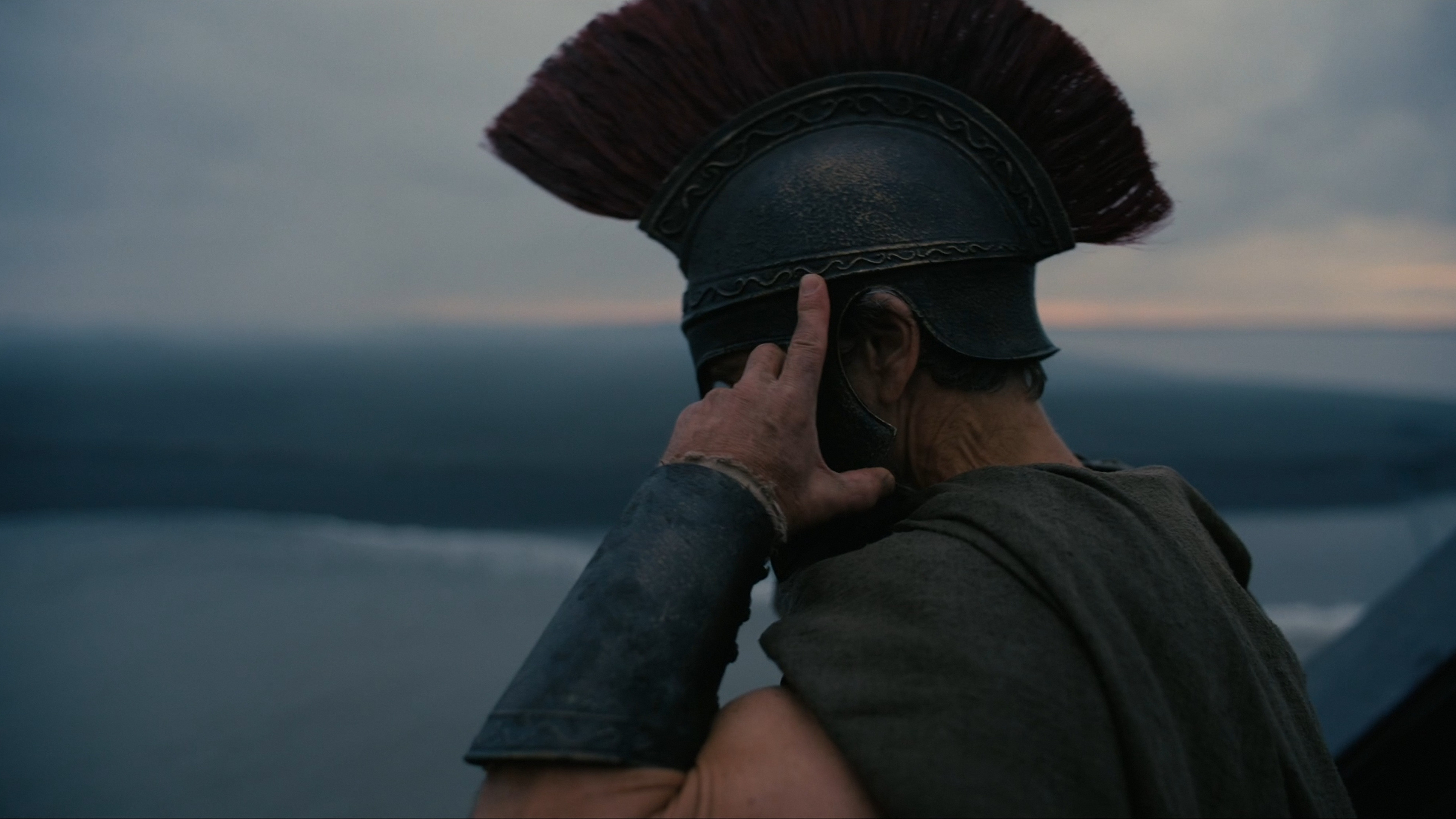
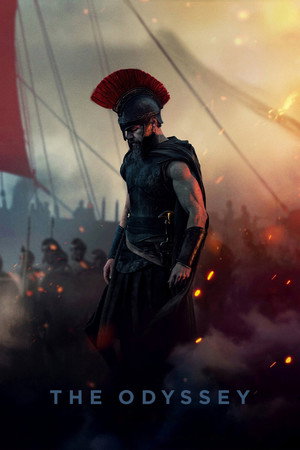


Ever since Christopher Nolan announced “The Odyssey” as his follow-up to “Oppenheimer,” anticipation has been immense. That excitement was briefly overshadowed by online outrage over several casting decisions, much of it fueled by misinformation about who actors like Elliot Page and Lupita Nyong’o were actually playing. Once the lights go down, however, those culture-war debates quickly fade away. What remains is one of the most breathtaking cinematic spectacles of Nolan's career.
Instead, filmgoers should see this movie. It is a true Hollywood spectacle worthy of the biggest screen possible. As I watched the film unfold over its nearly three-hour runtime, I spent much of it staring at the screen in genuine awe at the stunning set pieces, costuming and lush production design of how Nolan, perhaps the most daring filmmaker working today, pulled off some of these impressive feats.
At a reported $250 million, expectations were understandably enormous. Yet productions of this scale don't guarantee greatness. There are only a handful of directors working today with the technical ambition and creative authority to make a film this sprawling feel so cohesive.
Every dollar of its massive budget is visible on screen.
Nolan has spent the better part of a decade operating in a class occupied by few of his contemporaries, and “The Odyssey” may be his most technically ambitious achievement yet.
Although I loved this movie and the sensory experience that came with it, the film does have a few warts.
Nolan once again employs a nonlinear narrative. Homer's nearly 3,000-year-old epic is an ideal fit for Nolan, whose fascination with nonlinear storytelling mirrors the poem's own structure.
Christopher Nolan is the Stephen Spielberg of the twenty-first century. We all know this, yet the trailers for The Odyssey received a startling amount of push-back for someone who one would think had earned the trust of audiences. Most of this push-back was openly resentful of the casting of ethnic minorities in a movie that takes place in ancient Greece – despite the reality that actual ancient Greeks probably had darker skin, and ancient Greek society had plenty of people from Africa and the Middle East. In fact, the cast of the end-product is much whiter than the society in which this takes place. The truth is that this online push-back came from an immature sense of entitlement, specifically entitlement to call the shots and design the film as one imagines it. But, just like Odysseus in Christopher Nolan’s The Odyssey, we have to learn to give up our urge to have control before we fall into a sinking ship.
“Better than the book” is something that is rarely uttered about movies. This, especially for a text as immortal as Homer’s Odyssey. Perhaps “better” is not quite the right word, but at the very least, it is certainly “updated” for modern sensibilities while respecting the source material. Ancient Greek stories often prioritized masculinity as a virtue, and more contemporary virtues like mercy and compassion didn’t feature as often as they do today. There is nothing wrong with masculinity when it’s not toxic, but modern audiences will appreciate that this version of Odysseus can be vulnerable while also heroic, having emotional responses to the horrors he is witnessing and experiencing personal growth as a result. Odysseus’ character arc in this story is extremely compelling and is the highlight of what is otherwise a fantastic film.
If the main protagonist’s character arc isn’t the highlight, then it’s the score by Swedish composer Ludwig Goransson. Known for films like Sinners, Oppenheimer, the two Black Panther films, and Creed, Goransson is establishing himself as a potential rival to Hans Zimmer and maybe even John Williams in the history of film scoring. Visually, the film owes much to Dutch cinematographer Hoyte van Hoytema, known for Interstellar, Nope, Oppenheimer, and Dunkirk, among others. Whether in IMAX or standard formats, Nolan and van Hoytema capture natural landscapes in stunning fashion, and the dining hall where the suitors feast is appropriately chilling yet realistic in a way that’s hard to properly convey.
Of course, if you’re going to talk about The Odyssey, you have to talk about the monsters. That’s, like, everybody’s favorite part of the story. The witch Circe is a highlight of the film, partially because the special effects used in the transformation sequences is creepy, disgusting, and effective, even if not as convincing as possible. But Circe is also a highlight because she has just as much humanity as she does monstrosity, making her brief appearance more compelling than most of the monsters. The sirens are perfectly portrayed, only seen from a distance, but the effect that they have on the two characters who hear their call is chilling. The Cyclops Polyphemus is, predictably, a bit too reminiscent of people with physical and mental disabilities, just as characters like Quasimodo and the Frankenstein monster are, with his single eye and his relative lack of speech. He’s not seen as sympathetic nor purely malevolent, more animalistic and carnivorous, but if you can set aside the problematic nature of his portrayal, this sequence is still expertly done.
Probably the most visually compelling sequence in the film is the summoning of spirits from Hades. This doesn’t play out quite the same way as in the source material, where Odysseus speaks to his mother, but the vengeful nature of the spirits of Odysseus’ past still gets under your skin and plays a major part in Odysseus’ character arc. Charybdis and Scylla do not play as much of a role in the film as other monsters, but are still exciting, and reminiscent of the monsters from Ray Harryhausen’s retelling of ancient myths.

Odysseus, the legendary King of Ithaca, embarks on a long and perilous journey home following the Trojan War. Throughout his voyage, he is forced to confront the whims of gods, mythological monsters, and trials that stretch both his cunning and his humanity to the breaking point.
A commentary on the exploitation of the elderly fueld by the inherent greed of capitalism.
Though often underwhelming as a whole, Nevertheless is worth the watch because of the relationship between Sol and Jiwan. It is a stunning, refreshing take on the friends to lovers trope that LGBTQ media has been missing.
Set in a future dystopian United States in which water is running out, Julia Hart’s Fast Color (2018) is a refreshingly different take on the superhero film.
Endgame not only did not drop the ball, but it delivered for fans so much that it went on to become the highest-grossing movie of all time!
Eloquent and informative, Hajera Sheikh’s documentary Kathak: Dancing With Taboos tells a story of love for one’s culture and perseverance through adversity.
This story solidified my choices to consume a more plant-based diet and nearly made me cancel my subscriptions to big corporations like Amazon. The narrative was perfectly crafted and on par with Bong Joon-Ho’s other major works; Parasite and Snowpiercer.