




'Mulan' and 'Whale Rider': Director Niki Caro's take on Gender Inequality
Indie director, Niki Caro (known for 'Whale Rider') directs the live-action 'Mulan' and sets another example of strong females fighting against gender inequality.
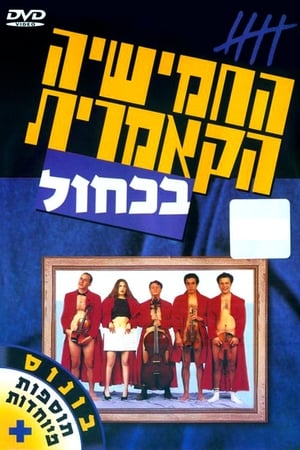


Hahamishia Hakamerit (Hebrew: החמישייה הקאמרית, The Kameri Quintet) was a weekly Israeli satirical sketch comedy television program created by Asaf Tzipor, who was also the main writer of the show, and Eitan Tzur, who directed the entire run of the show. Hahamishia Hakamerit was broadcast on Israeli Channel 2 and Channel 1 between the years 1993-1997. Later on, reruns of the show were broadcast on the cable channel Bip (channel). The show's often surreal skits were characterized by a satirical point of view which did not spare the audience sensitive subjects such as politics, national security, the Holocaust and sex.
Indie director, Niki Caro (known for 'Whale Rider') directs the live-action 'Mulan' and sets another example of strong females fighting against gender inequality.
'Midnight at the Paradise' premieres tomorrow at Toronto's Paradise Theatre! I had the pleasure to sit down with Vanessa Matsui to discuss the making of this film.
American Fiction is a genuinely entertaining film with a few lessons.
Him is visually stunning—all concrete cathedrals and bone-rattling impact shots that look like a nightmare highlight reel. Marlon Wayans is magnetic as this legendary quarterback who's basically selling salvation with a smile that never quite reaches his eyes. But the story keeps running in circles: more tests, more cryptic pep talks, more ritualistic drills. The sports-as-religion metaphor beats you over the head when subtlety would've been more effective. The middle drags, and that finale chooses spectacle over substance. It's undeniably stylish, but left me cold. Also worth noting: despite the Monkeypaw connection, this isn't actually a Jordan Peele film—he didn't write or direct.
Korean pop culture has mastered emotions as both a scientific field and an artistic revolution. Think of how K-Pop and K-Dramas have taken over the world. How? Simply put — they are addictive. How are they addictive?
Stevan Lee Mraovitch’s film is a beautiful tribute to family, found family, and the lengths people will go to support their loved ones.