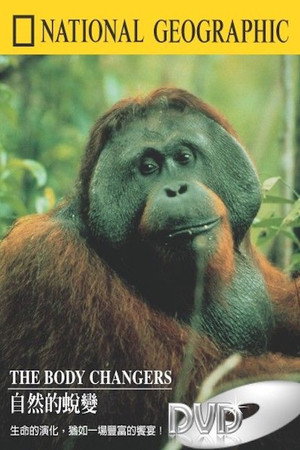
The Body Changers (2000)
For humans, change, mutation, is part of the very process of life, from birth to death. But for some living beings, change is far more radical. Tadpoles transform into frogs, caterpillars into butterflies, and these aren't even among the most radical changes possible in nature. The ability to transform, to change, is often crucial for survival. Only by adapting to their surrounding environment, through extraordinary transformations, can these animals continue to live on our planet.

- / 5
PopScore
Representation
Pictures and Videos

Movie Information
For humans, change, mutation, is part of the very process of life, from birth to death. But for some living beings, change is far more radical. Tadpoles transform into frogs, caterpillars into butterflies, and these aren't even among the most radical changes possible in nature. The ability to transform, to change, is often crucial for survival. Only by adapting to their surrounding environment, through extraordinary transformations, can these animals continue to live on our planet.
Rating:
Genre:Documentary
Written By:John Rubin
In Theaters:1/1/2000
Box Office:
Runtime:54 minutes
Studio:National Geographic, National Geographic Films

Articles You May Like
'Dark Waters' Review: A Gripping, Near Perfect Tale
I highly recommend Dark Waters. It’s a highly engrossing picture, which lends itself to cautionary storytelling. The dark information continually grows, inspiring change and accountability altogether. Overall, Haynes’ picture will not be known for its inclusiveness--but it will be known for being a fantastic, engrossing film.
"Outerlands" Provides Community in Unexpected Places
Intergenerational friendships and community can be so powerful, and this was a great example.
Weapons: Smartly Entertaining, Deeply Disturbing
At 2:17 a.m., every child in a third-grade class wakes up, leaves their home, and disappears into the darkness—except one. The next day, teacher Justine Gandy discovers that Alex Lily is the only student left, while the rest have vanished without a trace. Did Justine have something to do with it, or is a far more sinister force stalking the town, targeting not just children, but anyone in its path?
Why "People We Meet On Vacation" Did Not Meet Its Full Potential
Emily Henry’s adaptation reaches romance movie standards, but not romance reader standards.
Jane Austen Wrecked My Life (2025) and Wasted My Time
We, the Jane Austen aficionados, are suckers for everything and anything under the sun that’s remotely related to her and her world. That’s because we are so drawn to her unique style of fiction, romance, and social commentary, we take any allusion to her influence as a hint to what to expect when we start watching a movie or reading a book.