The Big One
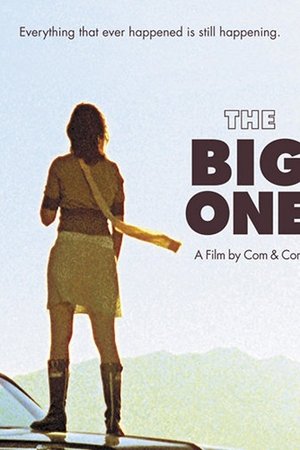
Anna has just buried her beloved aunt as California waits once more for the big quake to hit. Unsure of where she is going, she climbs into her old convertible for a trip through the desert. Along the way she meets a series of bizarre characters, including two dancing glitter girls, a crazy jogger and a heartbreaking crooner. Anna's friends and family also appear repeatedly to her in her car for imaginary conversations. The levels of time and perception, of the past and present, begin to merge and the trip increasingly becomes a journey into Anna's consciousness.

- / 5
PopScore
Representation
Pictures and Videos

Movie Information
Anna has just buried her beloved aunt as California waits once more for the big quake to hit. Unsure of where she is going, she climbs into her old convertible for a trip through the desert. Along the way she meets a series of bizarre characters, including two dancing glitter girls, a crazy jogger and a heartbreaking crooner. Anna's friends and family also appear repeatedly to her in her car for imaginary conversations. The levels of time and perception, of the past and present, begin to merge and the trip increasingly becomes a journey into Anna's consciousness.
Rating:
Genre:Fantasy
Written By:Johannes M. Hedinger
In Theaters:
Box Office:
Runtime:60 minutes
Studio:Com & Com





Articles You May Like
Y tu Mamá También: A Profound Exploration of Mexican Society and Self-Discovery
Years before Mexican director, Alfonso Cuaron, was winning Academy Awards for movies like Gravity (2013) and Roma(2018), he directed a small, intimate film about two best friends who decide to embark on an improvised road trip to spend time with an older, attractive woman who miraculously agrees to go with them. Y tu Mamá También is a deep journey into the raw sexuality and friendship of the young protagonists, as well as a subtle social and political commentary on Mexico at the time.
'The Invisible Man' (2020): The Hiddenness of Domestic Abuse
The 2020 remake of 'The Invisible Man' explores the hidden nature of domestic violence with a classic sci-fi character.
Lee Cronin’s The Mummy: A Missed Opportunity
Overall, Lee Cronin’s The Mummy is plagued by numerous flaws, both from a quality and from a diversity standpoint. The film relies on gore and loud sounds to drown out its flat script, flatter dialogue, and one-dimensional characters.
'How Power Looks' — MiamisFF Review
Praising Black representation and condemning the power structures that suppress it, a mother delivers an impassioned speech to her distant son.
Black Swan and its dark feminine energy
Every movement becomes a question of identity. To become who we are meant to be. In order to reach that we often have to shed who we once were, and that shedding can sometimes be so brutal it’s ungraceful.