












Time To Get Critical About Representation in “Shameless”
A decade since it aired, Shameless (U.S.) has always stuck to its guns (and baseball bats) about character diversity.
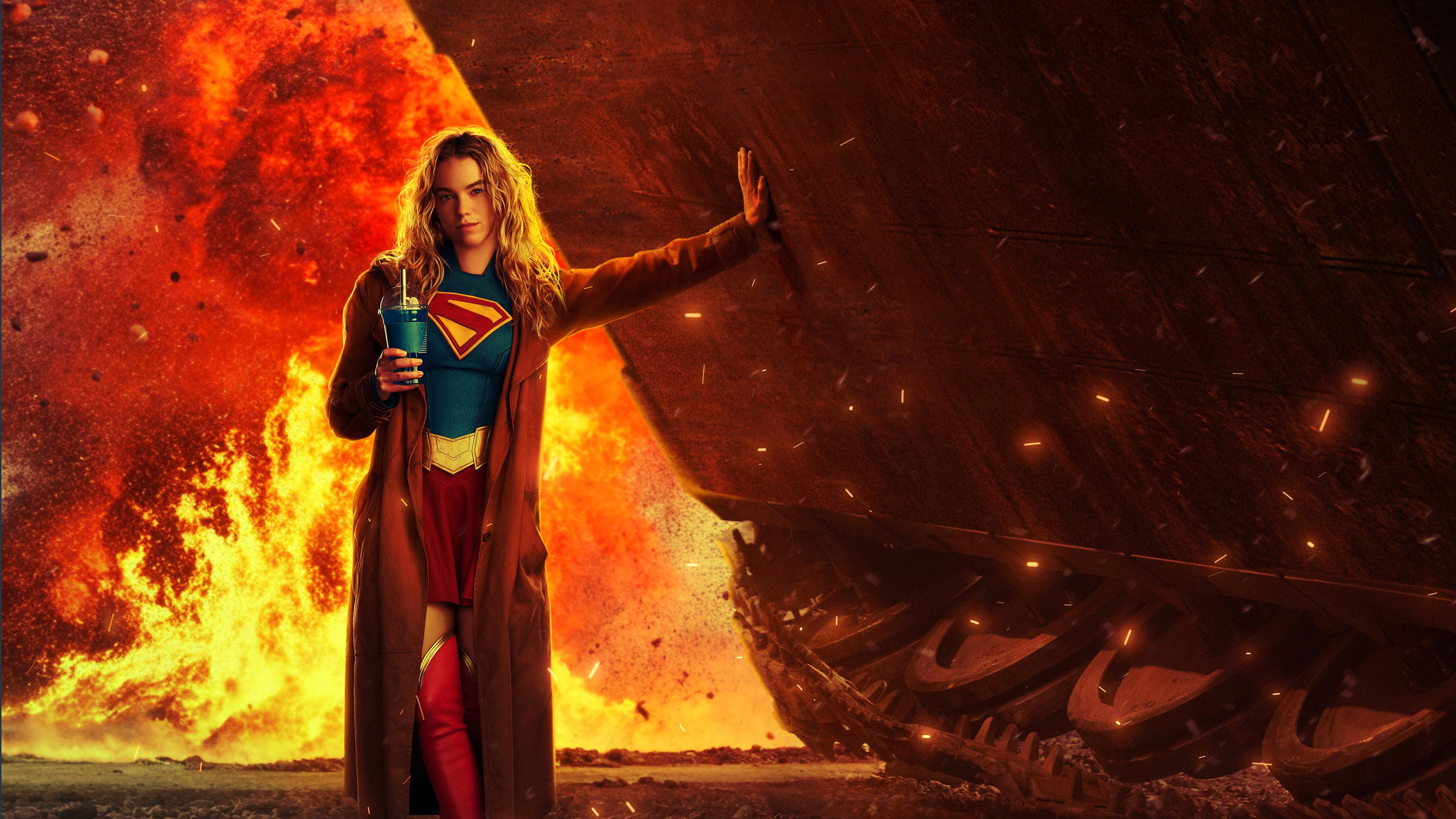



Supergirl embodied some super powerful themes. As a disclaimer to start, I have to rewatch it again later when it comes out on streaming, so I can watch it more thoroughly with subtitles due to bad hearing. However, I wanted to get this out there as a start in order to validate the movie, since I already love it. I want to do my part in countering the bad reviews online.
Kara (Milly Alcock) is both the cool girl as well as the more complex and compelling dark feminine character. As the cool girl, she’s a cross between Valkyrie (Tessa Thompson) in Thor: Ragnarok and Peter Quill (Chris Pratt) in Guardians of the Galaxy. Drunken, independent, and nonchalant. Yet, when it comes down to defending the innocent from danger, she steps up immediately. She saw little Ruthye as a nuisance at first glance, but then felt intrinsically called to protect her.
Supergirl is also somewhat reminiscent of Loki (Tom Hiddleston) in terms of having some of the darker qualities. She was traumatized by having her whole species decimated, including her parents and her planet. She was sent off to safety in a space shuttle by her father, alone with only her cute little puppy. The only kin in the universe remaining was her cousin —Superman, whom she met for the first time upon arrival on Earth.
Unlike other “good” superheroes, she’s not afraid to kill the villain in the end. She spares Ruthye the moral burden – insisting that she walk away from the bloody deed. After Ruthye (Eve Ridley) reluctantly complies and tearfully hugs her, departing the scene, Kara stabs the villain twice, in the chest. It’s pretty gruesome. This is pretty much the personification of dark feminine energy. Destroying evil in order to protect the good and the innocent. Kara possesses Kali energy, the dark feminine goddess in Hindu mythology. Only a baby fan of the DC comics if that, I hadn’t known the storyline ahead of time. I was a bit surprised by the direct demise of the villain, to be honest.
Superhero films usually have the “good guy” or “good girl” –the protagonist –spare the villain’s life, even after the villain had ended countless people including the hero's very own friends or family, as well as entire planets in some cases. Then of course the film needs a resolution, so the plot often has the villain die by their own karma or some random chance of nature like a rope that was holding them up off a cliff snapping by chance at the crucial time –with the superhero reaching out and attempting to save them out of “goodness”. Letting evil run rampant when given the chance to end it is not “good”. Of course this is all in the context of movies and superheroes, as real life is sometimes more complex, and the truth is often obscured. Superhero films grandly personify the essence of good and evil. Yet the trope of the “good guy” who is merely the “polite guy” always felt a bit illogical and even spineless or cowardly. Supergirl departed from that trope with character and charisma, and it really was powerful.
As Kara (Zor El)'s mother was dying from radiation poisoning before their planet was destroyed, she told Kara to be good. “It doesn’t mean you can’t be tough. It doesn’t mean you always have to be nice. Just be good.” Her dying mother's wish became central to Kara's identity throughout.
I also loved the sister-like friendship that developed between Kara and Ruthye. It's refreshing to see such camaraderie and love between a white girl and an Asian biracial girl. It's unfortunately still rare to see Asian characters on the good side in films, and even rarer still - maybe even singular - to see such a friendship and sisterhood develop between two superhero girls in such a dynamic, and not in competition with each other.
The one thing I will say is that Ruthye was definitely the damsel in distress, needing constant saving by Kara throughout the film. Granted she was only 14 years old, but still! The first and only time Ruthye saved herself and demonstrated any agility whatsoever was from the alien prison when Supergirl wasn't around. She's an enabler! Just kidding.
Overall Supergirl was a refreshing jolt for superhero films, and I'm excited to watch it again!
I was dreading going into the first big superhero blockbuster of the year, Supergirl. I really shouldn’t have been. This movie is pretty good. Not great, by any stretch of the imagination, but I still liked it. Supergirl provides lots of fun and a strong lead performance, and I think that justifies watching it.
The biggest reason why I was dreading going into the film was the humor. I expected a lot of gross humor involving bodily functions. You certainly get a lot of it…but it’s pretty well contained to the first fifteen or twenty minutes. Most of the humor in this movie is what you’ve become accustomed to seeing in MCU movies, Jurassic World movies, and other Hollywood blockbusters. Very few if any jokes will actually make you laugh, but many of the jokes will make you smirk. It’s extremely pedestrian, but it’s also inoffensive, which means it doesn’t drag down the better aspects of the film.
Among those better aspects of the film, probably the best is the fighting. Supergirl ups the stakes and makes its action scenes not only big in scope, but also big in roster. These action sequences are huge not just because they involve buildings collapsing or colors flashing on screen, but also because there are a ton of people involved at the same time. To imagine a typical action scene in this movie, think about another DC property: the Batman Arkham games. This is like watching one of those fight sequences, where you’re surrounded by goons and combo’ing them with unique moves. Only the main character has Kryptonian powers, which makes it even cooler. The best action in this film is elevated even beyond that, featuring not just spectacle but genuine tension, using villains who already know our main protagonist’s weaknesses and featuring classic situations of citizens in peril until the very last second.
Supergirl is marketed as punk rock. It is not punk rock. Or, if it is, it’s Avril Lavigne. It’s mainstream radio rock. But I like mainstream radio rock. I also like Avril Lavigne. That type of music has a certain upbeat energy while managing to appeal to a wide audience, and Supergirl does the same. However, it somewhat limits its audience with a surprising amount of vulgarity, whether it be the brief or a marathon of gross humor and the numerous instances of cursing. So much for this line of characters being kid-friendly.
This film would not work without Milly Alcock’s performance. She is great in this movie. Within the confines of what she’s expected to do, her personality shines and the evolution of her character is reflected in her expressions. Eve Ridley doesn’t get as much room to shine, playing an intentionally stoic and stiff character, but it is nice to have minority representation from the Filipina actress. Generally, this film is relatively neutral towards ethnic minorities, casting them in roles big and small, villainous and heroic, while casting white actors the same way. But it is nice having two strong and ambitious female leads as our main protagonists.
James Gunn is not directing this one, but director Craig Gillespie, best known for I, Tonya, seems to be attempting to emulate James Gunn’s success with the Guardians of the Galaxy movies. Whether it’s all the different planetary and extra-planetary settings, this specific style of humor, the nonstop cues of rock music, or the clash of personalities central to the movie’s tone, Supergirl really seems to be trying to imitate those movies. It doesn’t rise to the heights of that trilogy, but it’s a welcome addition.

When an unexpected and ruthless adversary strikes too close to home, Kara Zor-El, aka Supergirl, reluctantly joins forces with an unlikely companion on an epic, interstellar journey of vengeance and justice.
A decade since it aired, Shameless (U.S.) has always stuck to its guns (and baseball bats) about character diversity.
The way Jeannette has to deal with child neglect makes her insecure about her parents and how she was brought up and raised in the United States. This continues into adulthood, where Jeannette becomes a successful journalist and is frequently asked about her parents by others.
The Chronology of Water is a raw, honest, and unforgiving portrayal of how an abusive childhood ripples throughout one’s life. It is definitely the best movie I’ve seen Imogen Poots in. And even though Kristen Stewart has a long acting career for her young age, her directorial skills in this film show a lot of promise. Her feature debut as a director, an adaptation of Lidia Yuknavitch's critically acclaimed 2011 autobiographical memoir, is fully immersive, mesmerizing, and impressive.
Only time will tell what this new Black Panther and movie will show us with all of the old and new elements of the superhero craft integrated.
Summit Station, the longest running lesbian bar in Ohio, was one of the places that made lesbian community possible.
Wolverine carries Deadpool - literally and figuratively