









How My Octopus Teacher Depicts Healthy Masculinity
In My Octopus Teacher, documentary filmmaker Craig Foster models healthy masculinity by showing us a trusting, gentle, and emotionally fulfilling bond with an octopus.

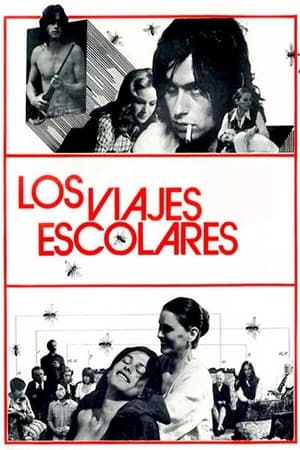
After completing his high school studies at the age of twenty-four, Óscar is an immature student, unable to afford alone his return to home during the summer season. Then he manages to convince Carlos, his young math teacher, to accompany him. Already in the family home, Óscar begins to behave in an increasingly unbalanced and irrational way. Meanwhile, his family will endeavor to see him as the reflection of the absent father figure.
In My Octopus Teacher, documentary filmmaker Craig Foster models healthy masculinity by showing us a trusting, gentle, and emotionally fulfilling bond with an octopus.
What starts off as a success story for a single mother living below the poverty line, slowly begins to weave itself into a tangled web of greed, guilt, and destruction.
It’s dark, uncomfortable, and there are things that don’t make sense.
"WHAT ARE YOU WILLING TO SACRIFICE?!!!!" "EVERYTHING!!!!!" This is but one of a multitude of highly emphatic questions, and subsequent answers, being asked in the newest feature film from one of the current masters of horror, Jordan Peele ("Get Out", "Us" and "Nope"). I must give Peele credit in that he continues to push the boundaries of specific genres and their associated tropes in order to provide what ends up amounting to subtly then jarringly intense, yet still character and story-driven, cinema that speaks more to indie stylings than mainstream.
Set in a future dystopian United States in which water is running out, Julia Hart’s Fast Color (2018) is a refreshingly different take on the superhero film.
Lin-Manuel Miranda’s 'Vivo' is a children's animated musical rich in Hispanic culture! The story follows a kinkajou as he delivers a love song for a friend.