

Diversity Programming At The Austin Film Festival
Coverage from the Austin Film Festival, highlighting some panels and films that emphasized the importance of diverse and inclusive storytelling.
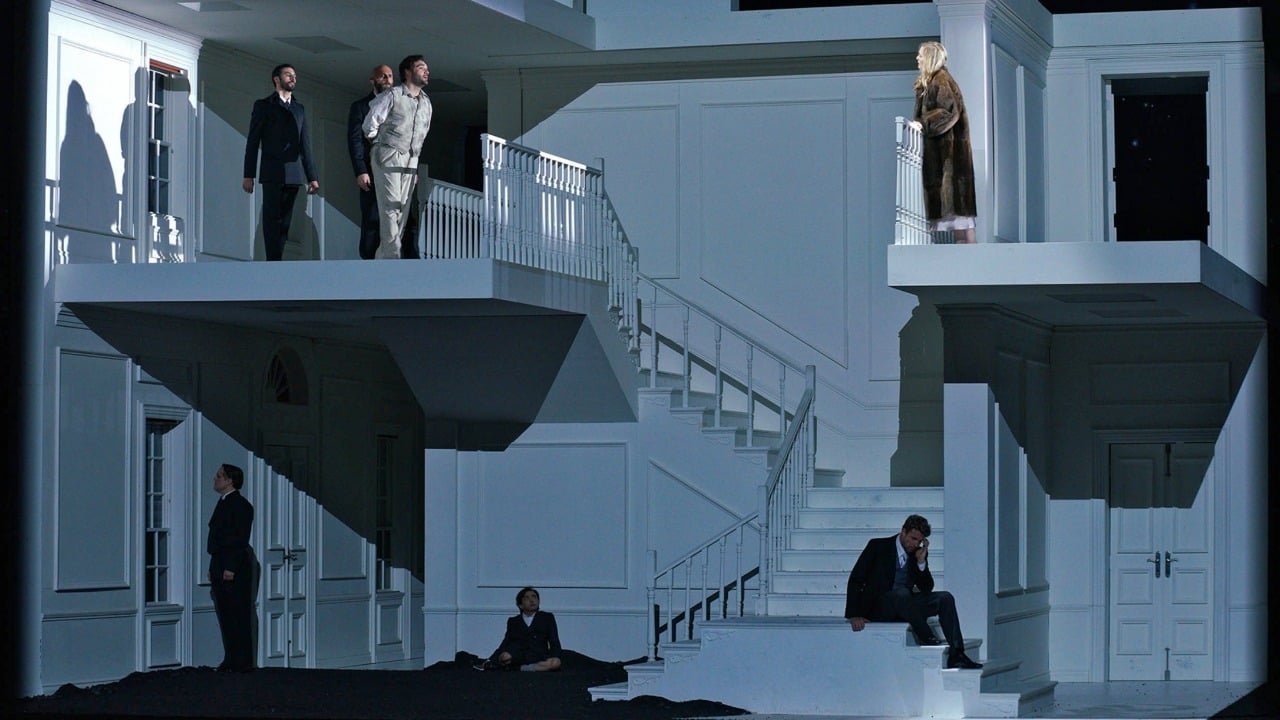



Claus Guth's exciting 2017 staging of Handel’s "Rodelinda" at Madrid’s Teatro Real, featuring Lucy Crowe and Bejun Mehta as Rodelinda and Bertarido, with conductor Ivor Bolton. After the successes of "Giulio Cesare" in 1723 and "Tamerlano" in 1724, Rodelinda completes the trilogy of Handel’s great opera seria masterpieces. The work was composed in 1725 using Nicola Francesco Haym’s libretto, a work inspired by Antonio Salvi’s earlier libretto which had been itself adapted from Pierre Corneille’s tragedy "Pertharite, roi des Lombards". Rodelinda thus brought one of the most glorious compositional periods in the Handel’s career to a close, about a decade after his arrival in the British capital. Mixing romantic storytelling and political intrigue, Handel produced one of his most beautiful scores, a true operatic tour de force.
Coverage from the Austin Film Festival, highlighting some panels and films that emphasized the importance of diverse and inclusive storytelling.
Have a Good Trip offers a rather balanced look at psychedelic use. While its main narrative is the stories of recreational use by celebrities, it does delve into the medical history of psychedelics and its use in psychotherapy.
In Stowaway, director Joe Penna narrates the story of a starship crew (Anna Kendrick as Zoe Levenson; Toni Collette as Marina Barnett; and Daniel Dae Kim as David Kim) struggling with serious technical problems on a two-year mission to Mars. During the trip, they discover aboard the presence of Michael (Shamier Anderson), a stowaway who jeopardizes everyone’s life on board.
Disney has hopefully learned some lessons since 1994. Are those lessons reflected in the 2019 remake of "The Lion King?"
Narnia, Avengers: Doomsday, Jumanji 3 are some compelling ones! Some of the biggest 2026 movies tied to popular franchises, books, video games, comics, and existing series. Marvel and DC, Disney and Pixar.
Throughout Brendan Fraser’s career, he has played a plethora of unique, layered characters who explore the importance of not being afraid to display your emotions, something that is often seen to not be a masculine trait. This idea of regulating emotion and what traits men are able to possess creates a toxic atmosphere for men who are often told they should not cry or represent their emotions in any physical way. These characters represent that men can be joyful, emotionally conscious, and sensitive, while also representing their masculine identity instead of painting those qualities as fighting against their masculinity.