
An Interview with Writer/Director Albert Acosta
We sat down with Writer/Director Albert Acosta to discuss his debut short film, (ha-ha), Acosta's foray into narrative cinema, and how his personal experiences have shaped his filmmaking philosophy.
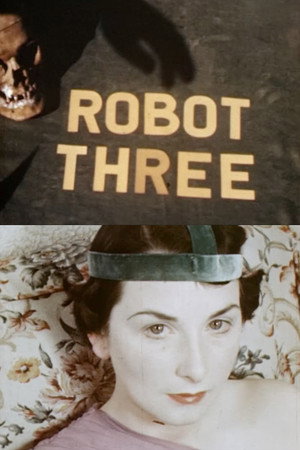


A grim scientist orders his third robot to destroy the male of two humanoid creations after they unexpectedly fall in love. But his plan backfires when the female robot seduces her creator into drinking from a poisoned cup before making her escape. Robot Three received both the Victor Saville Trophy for Most Outstanding Film and the Alfred Hitchcock Cup for Best Fiction Film at the 1952 Scottish Amateur Film Festival, cementing its place as one of the era's most celebrated Scottish amateur productions.
We sat down with Writer/Director Albert Acosta to discuss his debut short film, (ha-ha), Acosta's foray into narrative cinema, and how his personal experiences have shaped his filmmaking philosophy.
The movie opens with an empty house, cameras pan around from the perspective of what viewers are confused about at first, but turns out to be a spirit living in the home.
Gay representation is out there, but to portray a character who's gay as a big, happy brute is a rare treat.
Self expression among teenagers is explored in the live adaptation of Jerry Spinelli's novel of the same name.
The sequel following The Son of Bigfoot explores Adam's conflict of discovering his true identity as he tries to save a wildlife preserve.
Dramatic Horror!!! Wait, what?? Did you say "dramatic horror"?? IS there such a thing?? I mean, TRULY. Well, if San Francisco-based, Pakistani-born independent filmmaker Dr. Hassan Zee and this film critic have anything to say about it, there IS such a beast as experienced through the director's newest feature film set to officially debut October 4th in the City by the Bay. Folks, indie film will always be a bastion of experimentation and originality, and this film for me fits that bill.