











“Primetime” and Emptiness
This is not McDonald’s. This is something different.

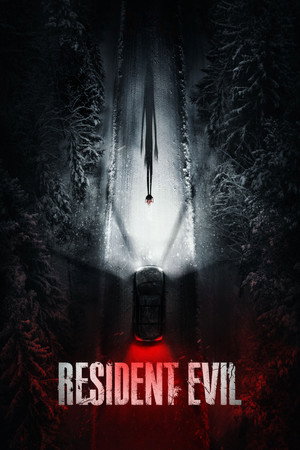

Zach Cregger is a few things. For one, he is the director of Resident Evil. He’s also the acclaimed director of Weapons and Barbarian. He was also born in 1981. All of these facts are relevant.
Full disclosure, I am one of the very few people on this planet that did not like Weapons. (Although even I have to admit the climax was pretty cool). Thus, just like with Weapons, I found Cregger’s approach to dark comedy in Resident Evil to be off-putting and ugly. If that sounds discrediting to you, then Resident Evil might just be for you.
But it is also conceivable that someone who liked the comedy in Weapons might find the comedy in this movie to be less than stellar. A lot of it is the main character Bryan, played by Austin Abrams, reacting to horrifying things with various curse words. It gets to the point where you wonder if this film measures up to Scarface or Pulp Fiction in its use of profanity – though certainly not in its writing. Much of the other jokes amount to our main character being inept in this situation, which is relatable but slows the film down considerably. Other jokes come from characters dying when they aren't expected to die, which does subvert expectations in a positive way, but leaves the script with very few personalities to anchor the film around. This means that Bryan needs to be a magnetic character on the level of Kurt Russell’s Snake Plissken from Escape from New York. Instead, Bryan is a bit of a wet blanket, and ninety percent of his personality is mere bewilderment. He gets one major emotional scene, but there is never any payoff for that scene, and it feels completely shoehorned into the film, clashing tonally with the rest of the picture.
It probably isn’t a coincidence that this review has referenced multiple 1980s classics. Resident Evil is loaded with cool ideas, mostly in terms of monster designs. But those monster designs feel extremely reminiscent of past films, most notably John Carpenter’s The Thing, but also various works by David Cronenberg and Guillermo Del Toro, or at least similar directors. One monster concept even seems to harken back to Alien. None of this even takes into account the fact that Resident Evil is based on a video game series that has eleven mainline entries, twenty spinoffs, and seven films preceding this entry, not to mention various comics and novels, plus merchandise. Cregger puts on a very impressive menagerie of bad guys for Bryan to try to survive, but none of it feels very original.

Medical courier Bryan unwittingly finds himself fighting for survival as one fateful, horrifying night collapses around him in chaos.
This is not McDonald’s. This is something different.
How powerful can a story be when it is stripped to the bare essentials of just a room, a handful of people and raw human voice?
If you mix religious rituals with dark mythology, the result will be effective, and the story powerful in 90% of the cases. That is exactly what happens at the beginning of The Vigil.
I highly recommend Dark Waters. It’s a highly engrossing picture, which lends itself to cautionary storytelling. The dark information continually grows, inspiring change and accountability altogether. Overall, Haynes’ picture will not be known for its inclusiveness--but it will be known for being a fantastic, engrossing film.
The character of Mulan is one of Disney’s best heroines. She’s brave, kicks butt, and has a kill count. What other Disney character has killed hundreds of Huns by crushing them with an avalanche? No one.
Mulan had to struggle to feel like herself and see herself properly. Some of us have to strive to have our reflection mimic what’s inside. We have to crawl. We have to fight.