
“Onslaught” is Insensitive, to Say the Least
Between its problematic nature, its lack of originality, and the senselessness of its violence, Onslaught cannot be recommended in good faith.
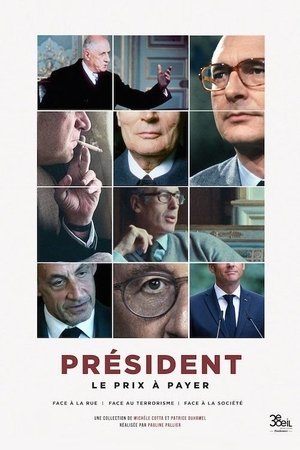


The history of the Fifth Republic is marked by terrorist attacks that have shocked the French people and placed their leaders in the position of having to shoulder the ultimate responsibility: that of embodying a nation struck by horror. From the actions of the OAS, which directly targeted General de Gaulle, to the mass killings by Islamist terrorists during François Hollande's five-year term, to hostage-takings such as that of the Algiers-Paris flight during the cohabitation between François Mitterrand and Edouard Balladur, and the assassination of Professor Samuel Paty in October 2020, all presidents have been confronted with these turning points, when politics takes a back seat and it is necessary to act according to one's conscience in the solitude of power.
Between its problematic nature, its lack of originality, and the senselessness of its violence, Onslaught cannot be recommended in good faith.
Lee Daniels’s Billie Holiday biopic The United States vs. Billie Holiday was released on February 26th, 2021, and my immediate reaction to it was one of discomfort.
In a world where we hear ringers and beepers at every corner, technology feels inescapable. This is why technology is often an enemy in Digital J-horrors, like One Missed Call.
The gentle, emotional nuances of Evan’s coming-of-age story would have been so beneficial to have incorporated into the life of a POC character. Showing a Black, Asian or Latino young man that is afforded the space to be vulnerable, flawed and sensitive while driving a compelling and widely-loved narrative would have been a game changer.
Documented human suffering is never easy to view or read about and is understandably triggering for many people, but it can be educational, and education is a key to change. An overwhelming amount queer people worldwide (and in my own country) have it far worse than I could imagine, and documentaries such as Welcome to Chechnya bring issues to light that certain groups of people would never see.
Even with its straightforward premise, “Richard Jewell” is ramped up by exceptional drama. In all honesty, the performances are out of this world. As Jewell, Paul Walter Hauser becomes a walking representation of gullibility. His bumbling antics create the perfect hero, and very quickly, we feel the societal heat that surrounds our protagonists.