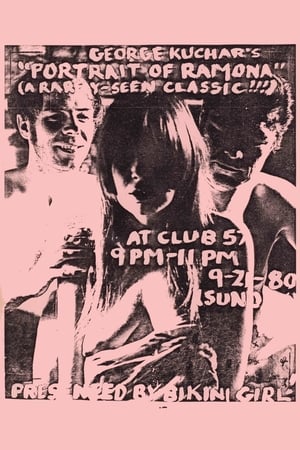
Portrait of Ramona (1971)
This movie was made mostly in Brooklyn during some very hot and empty evenings. Since the evenings were so empty, Jane Elford, the star, urged me to get started making another movie (we had completed PAGAN RHAPSODY the year before). I said "okay," and launched her in a photographed series of telephone calls, not really knowing who was going to be on the other end. I was interested at the time in irrational, neurotic responses and so the heroine was put into unstable situations that I dreamt up because I was making a movie with a plot and there should be some action .... Many of the stars appear nude and all I can say is that because of the heat and the general, overall feeling of the film which is one of the usual desperation and explosive emotions, I couldn't see any other way of them playing it. The general tone of everything was ... "Why even bother to get dressed?"

- / 5
PopScore
Representation
Pictures and Videos

Movie Information
This movie was made mostly in Brooklyn during some very hot and empty evenings. Since the evenings were so empty, Jane Elford, the star, urged me to get started making another movie (we had completed PAGAN RHAPSODY the year before). I said "okay," and launched her in a photographed series of telephone calls, not really knowing who was going to be on the other end. I was interested at the time in irrational, neurotic responses and so the heroine was put into unstable situations that I dreamt up because I was making a movie with a plot and there should be some action .... Many of the stars appear nude and all I can say is that because of the heat and the general, overall feeling of the film which is one of the usual desperation and explosive emotions, I couldn't see any other way of them playing it. The general tone of everything was ... "Why even bother to get dressed?"
Rating:
Genre:
Written By:
In Theaters:1/1/1971
Box Office:
Runtime:25 minutes
Studio:



Articles You May Like
‘Thunderbolts*’—A Spark of Hope in Dark Times
After years of mediocrity, Thunderbolts* is the welcome change MCU fans were waiting for.
'Blindspotting' is a Relevant Movie Everyone Should See, But Many Didn't
Movies also have the ability to make the audience think deeper about an issue that plagues society. "Blindspotting" does that without shying away from the intense reality of police brutality and racial discrimination.
'Hawkeye' Episode 4 Review: Things Just Got Real
In episode 4 of 'Hawkeye,' things are getting real, from a mystery surrounding a Rolex watch to hints at a certain "big guy" to the reveal of [SPOILER].
Why 'G.B.F.' (2013) is Pretty Good, Actually
The “gay best friend”, an age-old trope, has been done in countless films and television series. Ranging from one-note (Sex and the City's Stanford and Mario) to nuanced (Unbreakable Kimmy Schmidt's Tituss), the gay best friend exists to support and advise the main protagonist, with their conflicts swept to the side.
'Doctor Strange in the Multiverse of Madness': MCU Character Highlights and Easter Eggs
America is the crux of the storyline: she is the only person in existence with the power to jump between universes. As central as America is to the Multiverse of Madness story, she somehow didn’t get that much to do.