
Writing Great Villains: Why They Shouldn't Be Sympathetic
Writing great villains is about striking a balance between charming and evil, so we love them but also love to see them lose.

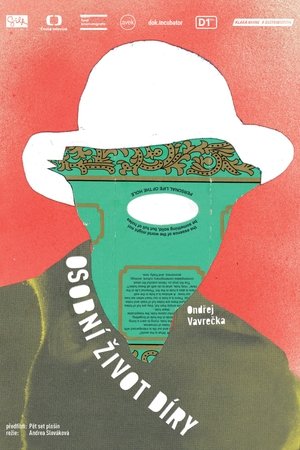


A hole gapes in a house wall. A small flaw, something imperfect that we seldom consciously direct our attention to. Filmmaker Ondřej Vavrečka finds holes in every corner. His focus is on the imperfections of human existence. A hole can also mean an uncertain future, or an empty stomach. The gap that partners leave behind after a breakup. Ondřej Vavrečka does not only deal with visible holes. He looks at the incomplete from a philosophical perspective. He also lets a nuclear physicist, a theologian and an ethnologist have their say. He underscores their thoughts and theses with absurd everyday scenes: a woman with a chair on her head or an invisible skier. These scenes combine with interviews, sounds and stop-motion sequences to create a playful collage.
Writing great villains is about striking a balance between charming and evil, so we love them but also love to see them lose.
One of the reasons that people with albinism have a difficult time being seen and represented in media is probably because there is a small percentage of them.
A throwback to the last months of the 20th century in this comedy film.
"13 Going on 30" tracks the tricky transition from adolescence to adulthood.
Birds of Prey has some of the best stunt work and choreography of 2020, and was the most fun I’d had in an action film since John Wick 3.
You can’t talk to my grandpa about The Sopranos. You can’t talk to him about The Godfather either. Merely by bringing up the subject, you’d be treated to a lecture on how movies and TV want you to believe that all Italians are criminals and mobsters. He won’t watch any of it, in protest.