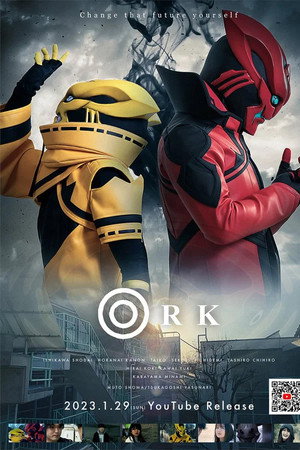
Ork
Takumi Kijima is an art student who has closed his heart off after having lost both parents. One day, a witch appears before him and bestows upon Takumi an Ork Stone, an object that grants its user the power to see the future. In one vision, Takumi sees his childhood friend Nozomi Shirai being killed by a mysterious red creature named Gowm. To prevent such a future from happening, Takumi transforms into Ork in order to fight Gowm and protect Nozomi.

- / 5
PopScore
Representation
Pictures and Videos

Movie Information
Takumi Kijima is an art student who has closed his heart off after having lost both parents. One day, a witch appears before him and bestows upon Takumi an Ork Stone, an object that grants its user the power to see the future. In one vision, Takumi sees his childhood friend Nozomi Shirai being killed by a mysterious red creature named Gowm. To prevent such a future from happening, Takumi transforms into Ork in order to fight Gowm and protect Nozomi.
Rating:
Genre:Action
Written By:Shoma Muto
In Theaters:
Box Office:
Runtime:46 minutes
Studio:





Articles You May Like
Olivia Rodrigo's 'driving home 2 u': How She Became Well-Recognized in the World
The singer recounts the memories of writing and creating her record-breaking debut album and shares her feelings as a young woman navigating a specific time in her life.
‘RUSTIN’: "Unsung" Is An Understatement
“Unsung” does not begin to describe the obscurity Bayard Rustin endured in the shadows of the Civil Rights Movement
A Tourist's Guide to Love and Adventure
Amanda Riley gets the opportunity to travel to Vietnam for the experience of a lifetime.
Straight Actors Playing Queer Characters Is Exhausting
It’s 2021 and what few LGBTQ+ films that are produced by major film studios continue to star cisgender heterosexual actors, rather than actual LGBTQ+ people.
What Netflix's “Shadow and Bone” Gets Right and Wrong with the Books’ Diversity
Netflix’s Shadow and Bone has a complicated relationship with race. It has a diverse cast, but not without its problems. Based on Leigh Bardugo’s two book series, the show features characters from the Shadow and Bone trilogy, which is very straight and white, and the Six of Crows duology, which is much more diverse. When bringing together a cast and writing about these characters, the team behind the show expanded upon some of the representation missing from the first trilogy, then seemed to take away representation from the duology. Shadow and Bone seems to play a bit of a push and pull game when it comes to portraying diversity onscreen.