









Snow White, Rewritten in a Minor Key
Despite the film’s efforts to reframe its heroine with modern complexity, a certain emotional distance lingers.

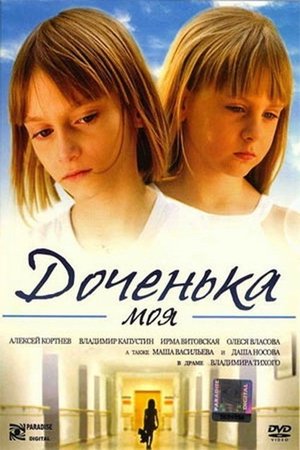


Denis Komarov is a policeman. He is an expert in technical equipment, a top specialist. His wife Natasha is a school coach. The ordinary family with a modest income leads a settled happy life until they get terrible news. Their only lovely child, the 8 year old Olya, is severely ill. Her last chance is a very expensive operation on kidney transplantation. The despaired parents are going to sell their apartments, but suddenly they get an alternative solution.
Despite the film’s efforts to reframe its heroine with modern complexity, a certain emotional distance lingers.
'Playing with Fire' was clearly a film made for a kid or tween-ish audience. Keeping that in mind, I thought 'Playing with Fire' was alright, though it did portray some harmful stereotypes.
My Beautiful Laundrette is often referenced as a positive LGBTQIA+ film because our two main characters are in a homosexual relationship with no shame, fear of violence or criticism. The struggle is not their sexuality. It is the treatment of the Pakistani citizens in England.
Soul takes intangible concepts like self and personality and makes them completely palpable and simple to digest.
At 2:17 a.m., every child in a third-grade class wakes up, leaves their home, and disappears into the darkness—except one. The next day, teacher Justine Gandy discovers that Alex Lily is the only student left, while the rest have vanished without a trace. Did Justine have something to do with it, or is a far more sinister force stalking the town, targeting not just children, but anyone in its path?
With The Father, writer-director Florian Zeller- who wrote and developed the play upon which the film is based- pulls no punches as he confidently makes every effort to put the audience in the mind of someone whose grip on reality has all but vanished. It’s a dazzling testament to Zeller’s abilities as a director as he makes his first transition from stage to film appear as if he’s been working behind a camera his entire career. The dialogue he fashions with co-writer Christopher Hampton, along with the work of production designers Peter Francis and Cathy Featherstone, collectively makes the downward spiral of dementia startlingly tangible, doing so in a way that can be comprehended by everyone except the person it directly affects.