

Peter Pan & Wendy: A Live-Action Fantasy
"Peter Pan & Wendy" is a diverse fantasy brought to life and an adventure for all ages.
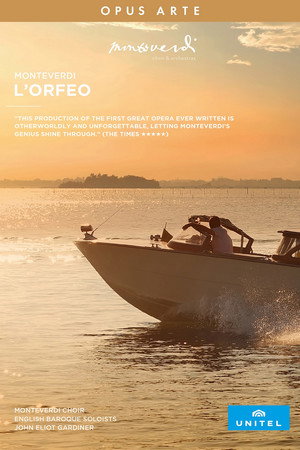


Considered to be one of the first operas in history, Monteverdi’s L’Orfeo (1607) re-enacts the tragic Greek saga of Orpheus and Euridice. In an attempt to bring his dead bride, Euridice, back to life, Orpheus descends to the underworld. But he fails to fulfil one vital condition: Orpheus is not allowed to look back at Euridice when she follows him back to the living world. Since he cannot prevent himself from turning around, his bride is forced to return to the world of the dead. Orpheus loses himself in the violence of grief, suffering but also growing and finally coming to a new and deeper understanding of himself. Called ‘a fable in music’ by Monteverdi, L’Orfeo was one of the most frequently performed operas of its era and is a magical introduction to Monteverdi’s probing investigation of human nature, character and desire by means of music.
"Peter Pan & Wendy" is a diverse fantasy brought to life and an adventure for all ages.
While the film didn’t hit me as emotionally as I wanted it to, I still enjoyed it. I simply wish there was a little more, particularly with the world building.
The film is a powerful narrative encompassing a theme that many people can identify with.
This incarnation of Animal Farm is filled with the generic plot points, immature humor, cardboard characters and visual flaws that you have come to know from today’s lesser children’s films.
The new biopic 'Elvis' highlights the beginning and end of the career of this rock and roll legend. The audience is taken on this journey knowing the tragic ending but not so much about what led him there. A large topic of discussion is the influences on Elvis that made him who he was as a singer, musician, and performer, which were blues, gospel, and country. Many of the songs that rose him to fame were songs by Black artists he heard growing up in primarily Black settings.