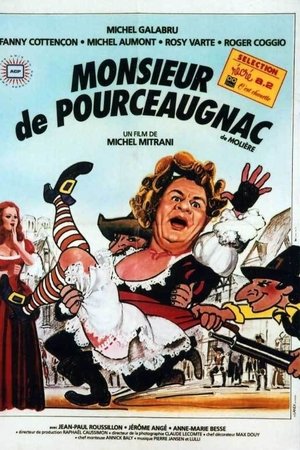
Monsieur de Pourceaugnac
Mixing real locations with a Louis XIV stage setting, director Michel Mitrani interprets the story first told in Moliere's play of the same name, written for the stage. A slightly supercilious country gentleman, Monsieur de Pourceaugnac (Michel Galabru) has arrived in Paris to marry Julie (Fanny Cottencon) the woman promised him, but he does not know that Julie is in love with a handsome young man and has no interest in marrying the grand Monsieur, at all. She and her lover ask the cunningly clever Sbrigani (Roger Coggio) for help, and he concocts a wild array of characters with claims on the easily gulled Pourceaugnac's attention, including arrogant doctors and women with supposed liens on his matrimonial intentions -- actually no more valid than the ostensible creditors out to collect imaginary debts from the unwary gentlemen. The dialogue and situations are as funny as when Moliere first wrote them, but Mitrani's version may be a bit long and slow for some tastes.

- / 5
PopScore
Representation
Pictures and Videos

Movie Information
Mixing real locations with a Louis XIV stage setting, director Michel Mitrani interprets the story first told in Moliere's play of the same name, written for the stage. A slightly supercilious country gentleman, Monsieur de Pourceaugnac (Michel Galabru) has arrived in Paris to marry Julie (Fanny Cottencon) the woman promised him, but he does not know that Julie is in love with a handsome young man and has no interest in marrying the grand Monsieur, at all. She and her lover ask the cunningly clever Sbrigani (Roger Coggio) for help, and he concocts a wild array of characters with claims on the easily gulled Pourceaugnac's attention, including arrogant doctors and women with supposed liens on his matrimonial intentions -- actually no more valid than the ostensible creditors out to collect imaginary debts from the unwary gentlemen. The dialogue and situations are as funny as when Moliere first wrote them, but Mitrani's version may be a bit long and slow for some tastes.
Cast

Articles You May Like
‘WandaVision’ Episode 5 Flips the MCU Upside Down
Wake Up, Dead Man (Everyone's Included Until Somebody Gets Stabbed)
When a powerful church leader is found dead, Benoit Blanc enters a tight-knit community where everyone has secrets, but not everyone is fully developed.
'One Missed Call': When an Onryō Goes Digital
In a world where we hear ringers and beepers at every corner, technology feels inescapable. This is why technology is often an enemy in Digital J-horrors, like One Missed Call.
'The Half of it' Handles its Presented Social Issues Thoughtfully
The social issues The Half of it takes on are handled well, between the antagonization brought on to Ellie for her race and the conflict that arises from her being gay. Both aspects of her character are built up over the course of the film and don’t seem abrupt or rushed. The film shows racism towards Ellie and her and father in varying levels, from having her schoolmates specifically address her as "Chinese girl” to the fore mentioned way her Dad is treated due to language barriers. The same can be said about Ellie being a lesbian. While she never truly “comes out” in the narrative, that does not undermine her journey of self-discovery from being meaningful. These ideas aren’t thrust upon the viewer in a preachy manor, the scenarios that occur feel believable given the rural setting. The film presents watchers with problems whom those like Ellie may face, and leaves us to sit with them and reflect.
“Omaha”: Innocence Broken by Economic Injustice
Omaha reminds us of what it can feel like to look at old family photographs. You sit with the bittersweetness, allowing it to wash over you; not drowning in it, but certainly affected by it.