
Love Bound
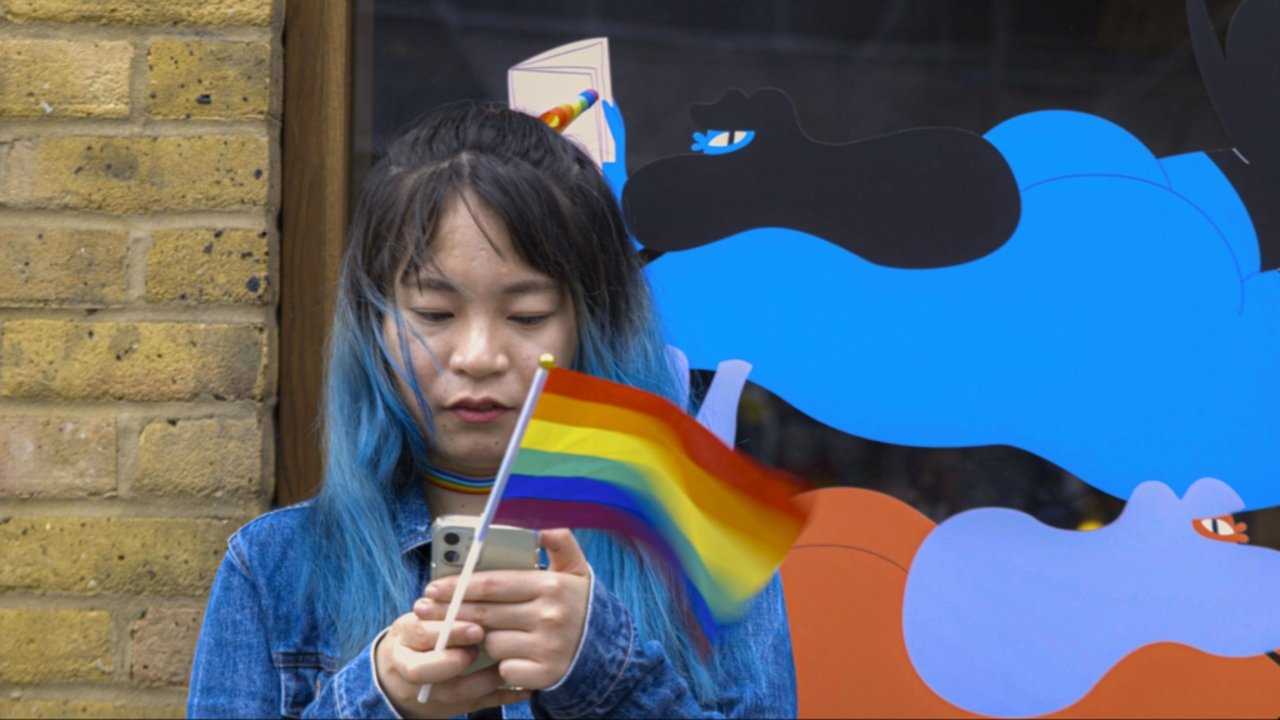
LGBTQ+ activist Qiuyan Chen became an unexpected celebrity due to her courageous legal battle against homophobic university textbooks in the 2010s. However, this newfound fame came at a price: she was outed by her tutor, subjected to conversion therapy by her parents, and monitored by the Chinese government. To escape these pressures, Qiuyan left for the UK, where she met her partner Bling: but her struggles were far from over. Interweaving reflections on Qiuyan’s sexuality and relationships, Shanshan Chen’s documentary examines this inspiring activist’s commitmentto building a close-knit community designed to support queer East Asian people in the UK: a solo endeavour that evolves into a movement with a growing support base.

- / 5
PopScore
Representation
Pictures and Videos

Movie Information
LGBTQ+ activist Qiuyan Chen became an unexpected celebrity due to her courageous legal battle against homophobic university textbooks in the 2010s. However, this newfound fame came at a price: she was outed by her tutor, subjected to conversion therapy by her parents, and monitored by the Chinese government. To escape these pressures, Qiuyan left for the UK, where she met her partner Bling: but her struggles were far from over. Interweaving reflections on Qiuyan’s sexuality and relationships, Shanshan Chen’s documentary examines this inspiring activist’s commitmentto building a close-knit community designed to support queer East Asian people in the UK: a solo endeavour that evolves into a movement with a growing support base.
Rating:
Genre:Documentary
Written By:
In Theaters:
Box Office:
Runtime:80 minutes
Studio:
Cast

Articles You May Like
Fear Street: Part One - 1994
I believe in homages, but there's a proper way to borrow a creative idea instead of making it appear as if you hit the copy and paste button. Most likely, anyone is better off simply reading the books. Or just put on Scream.
"Godzilla vs. Kong" is pure, stupid fun
"Godzilla vs. Kong" is all style and very little substance. It's also the most fun I've had in months.
'Mickey: The Story of a Mouse' (2022)
A historic documentary about the iconic Disney character gives viewers a glimpse into animation.
'Stargirl' Shows Self Expression Among Teenagers
Self expression among teenagers is explored in the live adaptation of Jerry Spinelli's novel of the same name.
Yara (2021): An Unfocused True Crime Narrative
The trouble with Yara (2021) is that in its attempt to tell the whole story, it struggles to tell a consistently engaging story.