


10 Women's Basketball Movies to Fuel Your March Madness Fandom
I compiled a list of women’s basketball movies and documentaries so that every type of fan can find their new favorite watch.
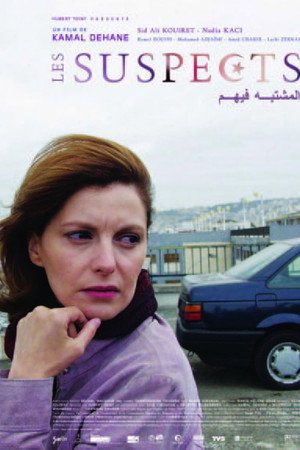


Mahfoud is a young teacher at a technical school in Algiers. Using his technical and computer skills, he refurbishes an old weaving loom that he intends to present at an international inventors’ conference in Germany. However, his travel plans are thwarted by administrative obstacles. Meanwhile, his neighbors keep a close eye on him, especially the elderly M’nouar, marked by the terrible memories of the Algerian War. He sees everything and everyone with suspicion. As far as he is concerned, Mahfoud has no good intentions—he may even be involved in subversive activities. Naturally, it does not help that Mahfoud is in a relationship with Samia, a young psychiatrist who has returned to the country after studying in Belgium. She challenges local norms and breaks taboos that unsettle those around her. In the end, Mahfoud manages to obtain a visa to attend the international fair. His invention wins a prize, and when he returns home, he receives a very different kind of welcome.
I compiled a list of women’s basketball movies and documentaries so that every type of fan can find their new favorite watch.
Initially feeling like a passionate group having a bit of harmless fun with filmmaking, it leads to something sinister enough to leave a mark.
Paris is Burning elevated drag and ballroom into the public consciousness and permanently impacted LGBT culture. However, the performers featured in the documentary didn't reap the rewards of their visibility.
The May Incluvie Movie Highlights features 3 fantastic coming-of-age films. We explore butterfly-inducing Sneakerella and Crush, and the sadly timely feature - The Fallout, about the after-effects of a school shooting.
At Coopers Chase, murder isn’t just tragedy—it’s Thursday’s entertainment. Chris Columbus’ The Thursday Murder Club transforms Richard Osman’s bestselling series into a cozy, clever whodunit where Helen Mirren, Pierce Brosnan, Ben Kingsley, and Celia Imrie prove that life’s sharpest twists don’t stop with age. With llamas on the lawn, cakes at the ready, and secrets around every corner, this star-powered mystery balances charm, humor, and heartache, reminding us that friendship, resilience, and reinvention might just be the ultimate clues.