



Blue's Clues and the Big City Adventure
A musical adventure that young viewers will enjoy as Blue and Josh travel to New York City for a big opportunity.
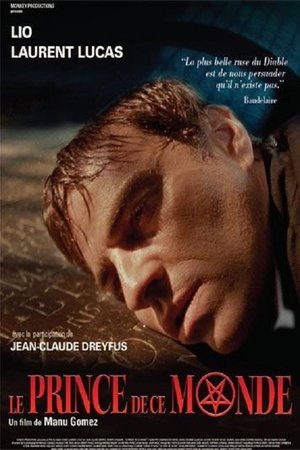


Abbé Donato believed he could live a quiet little life, far from all temptation, in the village of Sainte-Urulle, well placed in the race for the title of asshole of the civilized world. For temptation is something he would do well to be wary of, he who, beneath his cassock, hides a body made for the pleasures of love. Pleasures that the Baroness de Bailleux, a young nymphomaniac aristocrat, has nevertheless decided to introduce him to. Having fallen under her spell, the clergyman discovers that she is also the muse of a Satanist priest who officiates in a neighboring town, Canon Debruges, and, incidentally, the mistress of a psychiatrist who is a member of the Gilles de Rais fan club. Having become the baroness and the canon's plaything, the abbot enters a downward spiral that will take him to the limits of morality and even madness.
A musical adventure that young viewers will enjoy as Blue and Josh travel to New York City for a big opportunity.
Despite the film’s efforts to reframe its heroine with modern complexity, a certain emotional distance lingers.
At 2:17 a.m., every child in a third-grade class wakes up, leaves their home, and disappears into the darkness—except one. The next day, teacher Justine Gandy discovers that Alex Lily is the only student left, while the rest have vanished without a trace. Did Justine have something to do with it, or is a far more sinister force stalking the town, targeting not just children, but anyone in its path?
Him is visually stunning—all concrete cathedrals and bone-rattling impact shots that look like a nightmare highlight reel. Marlon Wayans is magnetic as this legendary quarterback who's basically selling salvation with a smile that never quite reaches his eyes. But the story keeps running in circles: more tests, more cryptic pep talks, more ritualistic drills. The sports-as-religion metaphor beats you over the head when subtlety would've been more effective. The middle drags, and that finale chooses spectacle over substance. It's undeniably stylish, but left me cold. Also worth noting: despite the Monkeypaw connection, this isn't actually a Jordan Peele film—he didn't write or direct.
A trouble-making teenager spends the summer working at a Southern California beach learning about responsibility.
Telling a story about the French and Indian Wars from the perspective of the British prioritizes the perspective of the colonizers.