







Writing Great Villains: Why They Shouldn't Be Sympathetic
Writing great villains is about striking a balance between charming and evil, so we love them but also love to see them lose.
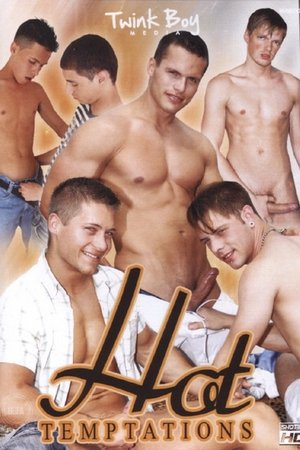


The inevitable will happen when you put horny, like-minded studs together - the eye contact, the knowing look, the tell-tale bulge! The clothes are soon just a heap on the floor and these guys are drinking down cock like their life depended on it. Fat, uncut dicks are soon sliding down throats before peachy asses are upended for a mind-blowing tonguing. Tight blow holes are spit-lubed and twitch in anticipation of a balls-deep fuck. Who's gonna bottom and who's gonna top - who cares when there's eleven guys all wanting the same thing!
Writing great villains is about striking a balance between charming and evil, so we love them but also love to see them lose.
Taika Waititi and the cast of Thor: Love and Thunder have been hyping up the gayness of this movie, and while there are queer characters, it's not quite the representation we were hoping for.
If you haven’t watched Good Trouble yet, you need to. This Foster’s spinoff, aptly named for civil rights champion and Congressman, John Lewis, follows Mariana and Callie Adams Foster as they begin a new chapter of young adulthood and navigate life, careers, social justice, and love.
With The Father, writer-director Florian Zeller- who wrote and developed the play upon which the film is based- pulls no punches as he confidently makes every effort to put the audience in the mind of someone whose grip on reality has all but vanished. It’s a dazzling testament to Zeller’s abilities as a director as he makes his first transition from stage to film appear as if he’s been working behind a camera his entire career. The dialogue he fashions with co-writer Christopher Hampton, along with the work of production designers Peter Francis and Cathy Featherstone, collectively makes the downward spiral of dementia startlingly tangible, doing so in a way that can be comprehended by everyone except the person it directly affects.
Typically in film, characters suffering from mental illness are used as plot devices or exaggerated for comedy. 'The House that Jack Built's representation exceeds in accuracy and realism of OCD.
In Saudi Arabia, a little girl (Wadjda) is told she can't have a bike because she's a girl. Wadjda struggles to obtain a bicycle to race her friend, Abdullah, due to the gender inequality and cultural norms of Saudi Arabia.