Last Christmas: Emilia Clarke Stopped Eating Hearts and Decided to Win Them.
In Paul Feig’s newest comedy, Last Christmas, Katarina (Emilia Clarke) didn’t give a heart, she got a heart, you see.

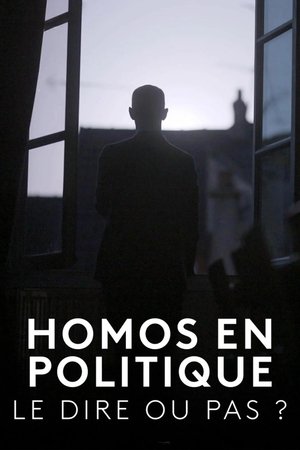


“Being French in 2024 means being able to serve as Prime Minister while openly gay.” With these words closing his policy speech on January 30, 2024, Gabriel Attal made history. The documentary *Homos en politique: le dire ou pas?* uses this milestone — the appointment and visibility of France’s first openly gay Prime Minister — as a springboard for a broader inquiry. Journalists Jean-Baptiste Marteau and Renaud Saint-Cricq travel across France to meet LGBTQ politicians of all generations, from Paris to rural towns. Eleven years after the protests against same-sex marriage, has France really changed? Through interviews with figures like Bertrand Delanoë, Sarah El Haïry, Jean-Philippe Tanguy, Franck Riester, and others, the film explores how coming out intersects with politics, homophobia, and representation — questioning whether saying “I’m gay” in politics is still an act of courage or simply a sign of the times.

Jean-Baptiste Marteau, Renaud Saint-Cricq
Director

Jean-Baptiste Marteau
Self - Interviewer

Mélissa Camara
Self - Députée européenne « Les Verts »

Sarah El Haïry
Self - Haute-commissaire à l’Enfance

Laurence Vanceunebrock-Mialon
Self - Députée LREM (2017-2022)

Gabriel Attal
Self - Ancien Premier ministre

Gabriel Bremond
Self - Maire d’Éclans-Nenon

Cyril Cibert
Self - Maire de Chenevelles

Bertrand Delanoë
Self - Ancien maire de Paris

Franck Riester
Self - Député « Ensemble pour la République »

Jean-Luc Roméro-Michel
Self - Adjoint à la Mairie de Paris

Jean-Philippe Tanguy
Self - Député RN
In Paul Feig’s newest comedy, Last Christmas, Katarina (Emilia Clarke) didn’t give a heart, she got a heart, you see.
The three themes of lessons learned from HBO Max's Station Eleven are the same as the pandemic: love, regret, and art.
Overall this movie was an easy watch, but by no means a worthwhile watch.
"Rodgers' & Hammerstein's Cinderella" wasn’t just a fairytale, it's a Black girl's fairytale. It was a fantasy world where the undeniable beauty of Black girls and Women was celebrated and beloved.
Life may find a way, but is it worth testing its fierceness and how far it will go?
Typically in film, characters suffering from mental illness are used as plot devices or exaggerated for comedy. 'The House that Jack Built's representation exceeds in accuracy and realism of OCD.