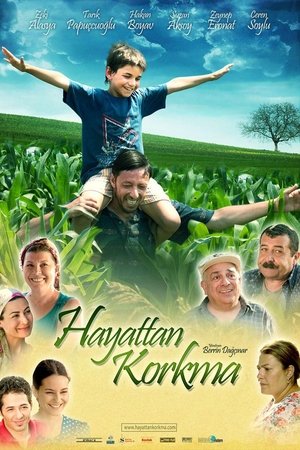
Hayattan Korkma
The film tells the story of three families who produce enough to sustain themselves in a small town and live off what they produce. Talat, who runs a dairy farm, Bedrettin, who raises chickens, and Rıfkı, who bakes bread in the bakery he inherited from his father, are three friends who have lived in the same town since birth, raised their children together, and have never been apart since childhood. When Talat's child falls ill, life begins to change suddenly. The most important message the film conveys to the audience is defined as "hope."

- / 5
PopScore
Representation
Pictures and Videos

Movie Information
The film tells the story of three families who produce enough to sustain themselves in a small town and live off what they produce. Talat, who runs a dairy farm, Bedrettin, who raises chickens, and Rıfkı, who bakes bread in the bakery he inherited from his father, are three friends who have lived in the same town since birth, raised their children together, and have never been apart since childhood. When Talat's child falls ill, life begins to change suddenly. The most important message the film conveys to the audience is defined as "hope."
Rating:
Genre:Drama, Comedy, Family
Written By:
In Theaters:
Box Office:
Runtime:
Studio:










Articles You May Like
"Him" - All Flash, No Game
Him is visually stunning—all concrete cathedrals and bone-rattling impact shots that look like a nightmare highlight reel. Marlon Wayans is magnetic as this legendary quarterback who's basically selling salvation with a smile that never quite reaches his eyes. But the story keeps running in circles: more tests, more cryptic pep talks, more ritualistic drills. The sports-as-religion metaphor beats you over the head when subtlety would've been more effective. The middle drags, and that finale chooses spectacle over substance. It's undeniably stylish, but left me cold. Also worth noting: despite the Monkeypaw connection, this isn't actually a Jordan Peele film—he didn't write or direct.
Dune (2021): An Islam-Inspired Theme With Powerful Aesthetics, but Reminiscent of Lynch
Villeneuve’s Dune is a masterpiece for its crafting process, but references to David Lynch's picture are sometimes too obvious.
'The Bear' Season 2 is a Recipe for Success
‘The Bear’ Season 2 has all the right ingredients for both comedy and drama.
'Don't Lose Your Head' - MiamisFF Review
'Don't Lose Your Head' follows the motto of "grades aren't everything."
The Grainy Landscape, Worn-Out Household, and Remembering the Past in 28 Years Later
How do zombie films shine new light in the post-Covid and post-Brexit era?