
Is Disney Finally Learning?
Disney has a glaring and, up until recently, unaddressed issue that spans nearly its entire lifetime - an absence of diversity.
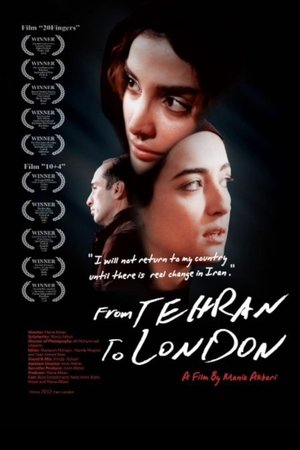


Mania Akbari’s From Tehran to London (2012), has a Russian-doll structure. It begins with Akbari shooting her latest film entitled Women Do Not Have Breasts about a couple, the young poet and writer Ava and her upper-class older husband Ashkan, who live in a large, beautiful – yet isolated – house in the hilly outskirts of the city. Household workers Maryam and Rahim attend to their needs. But despite their comfortable lives, Ava is increasingly dissatisfied and estranged in her relationship with Ashkan. What seems to have been an exciting relationship in the past is now little more than a series of mutual reproaches, as Ashkan incessantly tries to change Ava into someone she isn’t – a dutiful wife.
Disney has a glaring and, up until recently, unaddressed issue that spans nearly its entire lifetime - an absence of diversity.
Even now, the well-established Snyder has yet to learn this as he continues to allow misguided decisions to convince him that his projects hold the same kind of intelligent and emotional weight. Army of the Dead is a tonal mess, one that never decides what it’s trying to be, and, for all we know, doesn’t want to decide.
The newest Pedro Almodóvar movie, Pain and Glory, focuses on an aging and debilitated filmmaker, Salvador Mallo (played by Antonio Banderas) reflecting on his life in his old age.
Red, White and Royal Blue still does not have an official release date. However, the cast has been sharing pictures of their filming.
The social issues The Half of it takes on are handled well, between the antagonization brought on to Ellie for her race and the conflict that arises from her being gay. Both aspects of her character are built up over the course of the film and don’t seem abrupt or rushed. The film shows racism towards Ellie and her and father in varying levels, from having her schoolmates specifically address her as "Chinese girl” to the fore mentioned way her Dad is treated due to language barriers. The same can be said about Ellie being a lesbian. While she never truly “comes out” in the narrative, that does not undermine her journey of self-discovery from being meaningful. These ideas aren’t thrust upon the viewer in a preachy manor, the scenarios that occur feel believable given the rural setting. The film presents watchers with problems whom those like Ellie may face, and leaves us to sit with them and reflect.
After We Collided is a sequel to last year’s After, which itself was based on Anna Todd’s 2014 novel of the same name, and which was originally published as a Harry Styles-centric fan-fiction on WattPad (a similar path as E.L. James’ Fifty Shades of Grey series).