

Lighthearted but Shallow: 1Up's Take on Women in Gaming
In a post-Gamergate media landscape, it's ambitious to have a film confront the harsh reactions to women in gaming from a comedic lens.
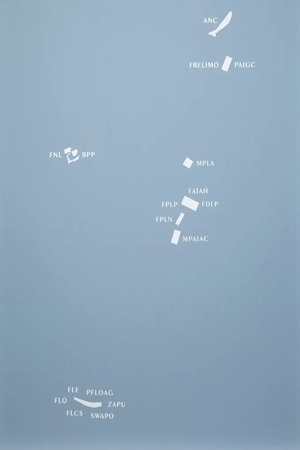


Foreign Office focuses on the period during which Algiers – between 1962 and 1972– became the “mecca of revolutionaries”, hosting representations of many liberation movements from Africa, Asia and the Americas, such as Eldridge Cleaverʼs International Section of the Black Panther Party, Mandelaʼs ANC, or the PAlGC (African Party for the Independence of Guinea and Cape Verde) founded by Amilcar Cabral. Taking as a starting point this forgotten past of post-independence era and internationalism, Foreign Office, invites to reflect on history and its transmission, and on emancipation as essentially linked to poetry. The film shows two young Algerians “re-writing” this history through images, language, and orality, articulating an historiography defined by “cinematic montage” as well as by translation as forms of writing, investigating, and reflecting on history and its resonances.
In a post-Gamergate media landscape, it's ambitious to have a film confront the harsh reactions to women in gaming from a comedic lens.
I was able to sit down and talk with up and coming producer and director Ryan Polomski who talked about his latest project Raymond Lewis: LA Legend. It's a documentary about basketball star Raymond Lewis and here is what I found out.
The 2019 film, Vai, takes us through eight stories across the islands of Oceania. The settings are unbelievably beautiful, the cast is beautiful, the languages are beautiful, and the stories are beautiful…but heartbreaking.
Cord Jefferson's hilarious and thought-provoking film continues a long-standing cinematic tradition, expanding the conversation around the impact of systemic racism in today's media.
A family drama is woven with quiet yet powerful forces of words and nature.
Upon first watch, Buddy feels like it should have been aired on Adult Swim at four in the morning.