

Why Joel Coen’s ‘The Tragedy of Macbeth’ is the Best Version
Joel Coen has gone solo to create perhaps the greatest version of Shakespeare's 'Macbeth' since Shakespeare himself.
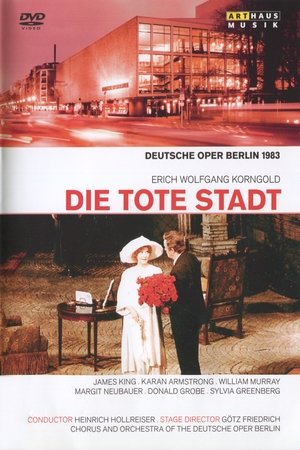


In 1920s Germany, Erich Korngold's work was considered “degenerate” and banned. Eventually, in 1934, he left for Hollywood. There, he made a name for himself as a film composer and only rarely wrote great works for the stage. Many of his quite successful operas, composed between 1913 and 1927, stopped being performed after World War II. Among these was his perhaps most significant work, Die tote Stadt (“The Dead City”), which was performed again for the first time after a long hiatus in 1955 in Munich. Further productions followed. Nevertheless, Götz Friedrich's version of 1983 for the Deutsche Oper Berlin was only the fifth new production of the opera after 1945.
Joel Coen has gone solo to create perhaps the greatest version of Shakespeare's 'Macbeth' since Shakespeare himself.
It’s fun, it’s energetic, but it’s also understated and vicarial. Zola is a modern black fairytale and future of black movies.
Over the last several years, I have had the privilege of being one of the critics having the opportunity to watch and review several films from writer/director/producer Marcellus Cox, whose efforts are never anything less but grounded, relevant, and steeped in unflinching glimpses illustrating the gripping, inspired, and ever-vacillating realms that make up the human condition.
'Alice' is a genre trifecta: one part revenge drama, one part historical account, one part throwback to Blaxploitation—kinda 'Django' meets 'Roots' meets 'Foxy Brown.'
Another story focuses on the bond between a young man and a shelter dog in this Netflix drama film.