

“Disclosure Day” and Anthropocentrism
Disclosure Day asks us to question humanity's role in the universe but falls victim to the same assumptions of centrality.
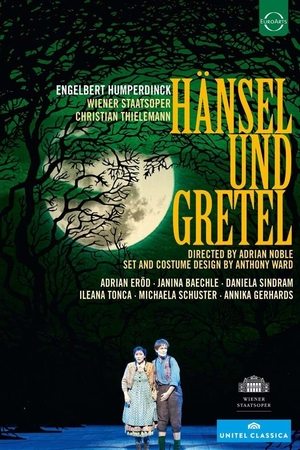


Since its premiere in 1893, Engelbert Humperdinck's fairytale opera »Hansel and Gretel« has awakened a passion for music theatre in generations of children. Even his great contemporaries – such as Richard Strauss, Gustav Mahler or Johannes Brahms – were delighted by this work. It is the successful combination of seemingly folkloric simplicity and the complex musical language of Wagner’s direct successor, of simple melody and artful orchestration, and of socio-critical realism and atmospheric magic that makes the music to the Brothers Grimm’s famous story so captivating. And so the Vienna State Opera's production speaks to both children and adults alike, leading through wondrous projections of a magic lantern into the middle of the fairytale storyline.
Disclosure Day asks us to question humanity's role in the universe but falls victim to the same assumptions of centrality.
The Lego Movie achieves great humor and story with a combination of childish comedy, adult references, irony, and by subverting popular movie tropes.
I’m disappointed in The Woman in Cabin 10, but that’s at least in part because of my love of Ruth Ware’s novel.
Darren Aronofsky’s Caught Stealing is a gritty, darkly funny thrill ride through 1998 New York, with Austin Butler delivering a raw, magnetic turn as Hank Thompson—a washed-up ex-ballplayer turned bartender whose life implodes after cat-sitting for his punk neighbor drags him into a violent underworld of gangsters, crooked cops, and chaos. Brutal yet unexpectedly hilarious, the film blends noir grit with midnight-movie absurdity, proving Aronofsky can reinvent himself while Butler cements his status as a true movie star.
Juno is extremely funny, very well-written, and contains great performances. The film is also about a very important topic, one that is extremely relevant now: women’s reproductive rights. Is this Oscar-winning film spreading a pro-life or pro-choice message to its audience?
“I’m always interested in exploring female fantasy, and the sexy witch is a loaded archetype that is simultaneously about men’s fears and fantasies about women, and women’s feelings of empowerment and agency. So whereas we are used to seeing the sexy witch or the femme fatale from the outside, I wanted to explore her from the inside.” - Anna Biller, on why she made The Love Witch