


'Overcast' - MiamisFF Review
The makings of a great midseason filler episode that would connect in many different directions. This is a police drama filler with a guest director.

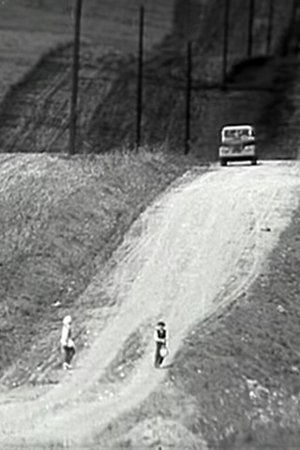
Documentary with beautiful black-and-white CinemaScope shots, which combined impressive scenes from a trip to the Ukraine with historical reminiscences. The censors criticized the "too narrow and too intimate view" of the Soviet Union; they didn't like the fact that bells were ringing, that a chauffeur from the film crew or an elderly peasant couple recalled the horrors of war or that Nikolai Gogol and Yevgeny Yevtushenko were quoted - that was considered backward-looking. Without the knowledge of the filmmakers Karlheinz Mund and Christian Lehmann, the film was shortened and mutilated; the seventeen minutes that were allowed for a public screening are only the torso of a large draft.
The makings of a great midseason filler episode that would connect in many different directions. This is a police drama filler with a guest director.
If the message here is that without a support system, grieving people turn into monsters, it’s not really well-delivered and may be flawed as a message itself.
Those perfect Summer or Fall days. The sun is shining, the temperature is JUST right, and you've got nothing else to do. Therefore, isn't it time to get outside and take a nice stroll through the park, or along the shoreline (should you be that fortunate), or even just around the neighborhood? Sure. BUT.....if one lives in the America found in the newest film adaptation of the work from horror author/cultural icon Stephen King.....doing this SHOULD be the LAST thing you hope to find yourself engaged with.
Unlike other documentaries about Princess Diana, Perkins’ film, 'The Princess', is an entire documentary consisting of media coverage and public opinion, rather than a typical series of people interviewed with firsthand experience of the Princess. 'The Princess' beautifully depicts how we perceive Diana as a media figure rather than a real person, specifically creating her persona as a fairytale figure turned saint and icon.
The way Jeannette has to deal with child neglect makes her insecure about her parents and how she was brought up and raised in the United States. This continues into adulthood, where Jeannette becomes a successful journalist and is frequently asked about her parents by others.