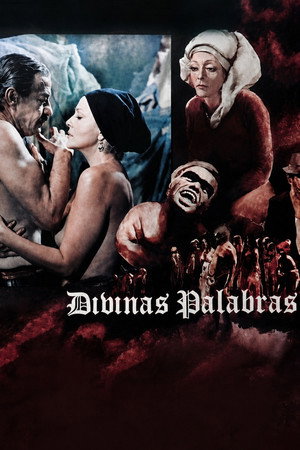
Divine Words
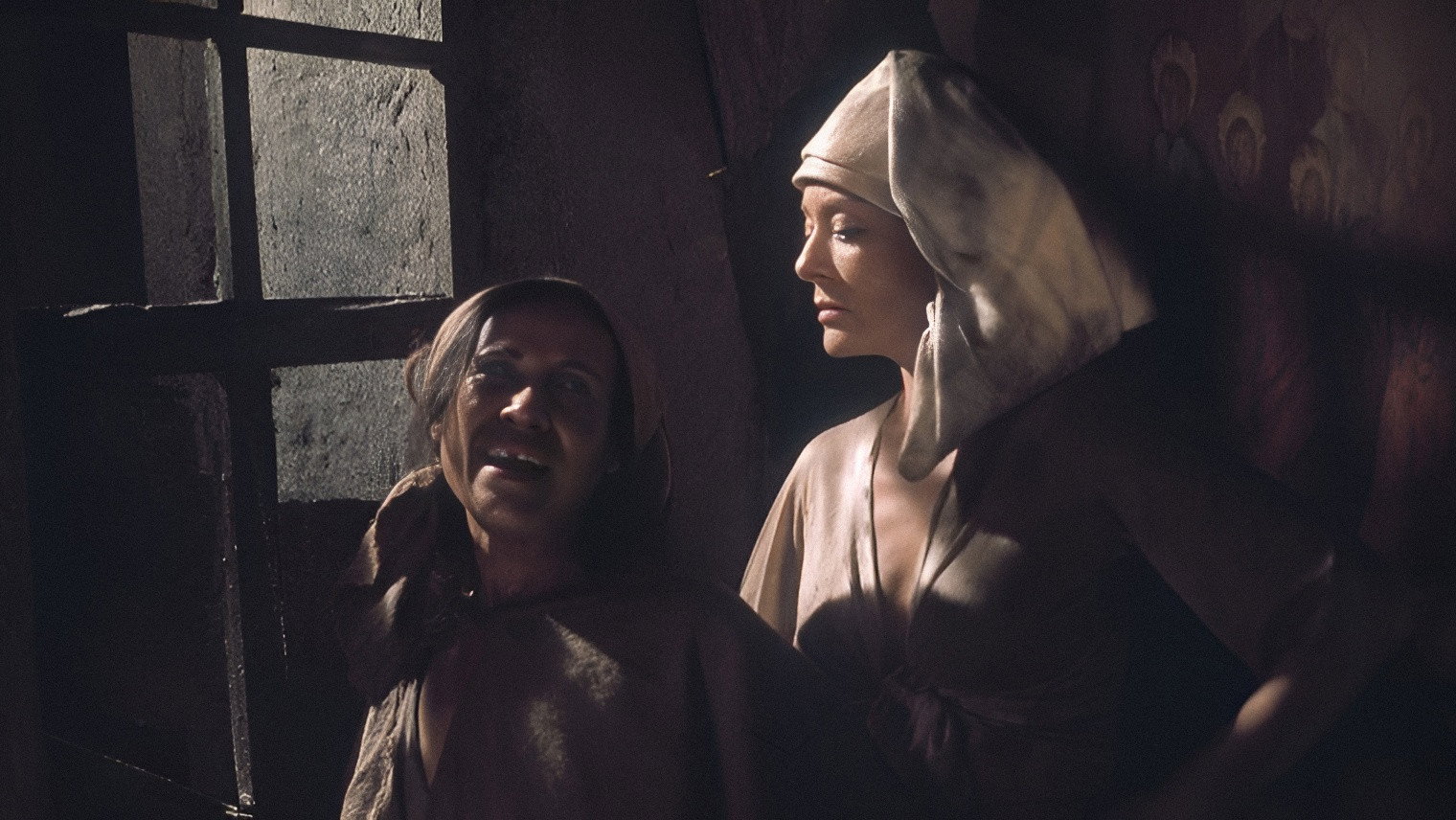
Mari Gaila (Silvia Pinal), is an adulteress who lives between ragged, thieves, prostitutes, dwarfs and other misshapen beings, in a rare box at a country and a vague time. Her husband, is a poor sacristan who agrees with other relatives to do business with the display of his orphaned nephew, a mentally retarded dwarf. Caught in committing adultery with her lover, Mari Gaila is caged naked and punished by the people.

- / 5
PopScore
Representation
Pictures and Videos

Movie Information
Mari Gaila (Silvia Pinal), is an adulteress who lives between ragged, thieves, prostitutes, dwarfs and other misshapen beings, in a rare box at a country and a vague time. Her husband, is a poor sacristan who agrees with other relatives to do business with the display of his orphaned nephew, a mentally retarded dwarf. Caught in committing adultery with her lover, Mari Gaila is caged naked and punished by the people.
Rating:
Genre:Drama
Written By:Juan Ibáñez
In Theaters:
Box Office:
Runtime:100 minutes
Studio:Conacine









Articles You May Like
We’ve Always Been Here: 5 Openly Gay Hollywood Stars From The Past
These openly gay Hollywood figures risked so much by being honest about their sexuality: judgment, loss of employment, hate – even violence and death.
Leviticus (2026) Delivers a Braver Kind of Romantic Horror
Adrian Chiarella’s Leviticus is a beautiful, poignant, enraging, gut-wrenching, and heartbreaking film about the trauma and harm conversion therapy inflicts on young queer people. Even though its classification as horror holds, the emotional bond between the two main characters, Naim and Ryan, elevates the story into a realistic romantic drama on par with Eternal Sunshine of the Spotless Mind.
Moonage Daydream: an artist who never conformed, but only evolved
With mismatched eyes, a willingness to experiment with hair color and style, and a rail thin frame, Bowie always drew attention. But he shunned gendered attractiveness, creating his own space somewhere in between. This hallucinatory and often nonlinear 2022 documentary is a perfect salute to David Bowie’s life and career. Rather than interviewing those that knew Bowie, the standard convention for biographical portraits, director Brett Morgen mostly lets the artist’s images, performances, videos, and words speak to capture the essence of the artist. Bowie was more than just a pop star. He painted, sculpted, acted in films, and was a thoughtful and articulate person who gave sincere answers to even the most shallow interview questions.
How To Train Your Dragon: An Endearing Story of Fortitude, Forgiveness, and Friendship
An unlikely friendship changes the hearts of men, and helps a young boy come into his own.
Light Language in Casablanca
What makes the lighting in Casablanca even more impressive is how it reflects the emotional states of the characters without needing explicit dialogue.