

'Alice' Doesn't Live Here Anymore
'Alice' is a genre trifecta: one part revenge drama, one part historical account, one part throwback to Blaxploitation—kinda 'Django' meets 'Roots' meets 'Foxy Brown.'
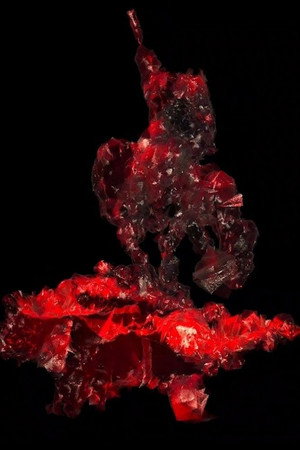


Half tongue-in-cheek absurdism and half deadly earnest, CULTURE CAPTURE: TERMINAL ADDDITION continues the New Red Order’s ongoing project of “culture capture,” recruiting viewers to participate in a program of practical strategies to counter the “salvage mindset,” which sets aside Indigenous culture and sovereignty by consigning it to the past. These strategies include using new, accessible technologies, such as smartphone apps that produce 3D scans of objects, both of Indigenous material that museums and other institutions may hold and public monuments that celebrate and re-affirm the norms of European settler culture.
'Alice' is a genre trifecta: one part revenge drama, one part historical account, one part throwback to Blaxploitation—kinda 'Django' meets 'Roots' meets 'Foxy Brown.'
What makes the lighting in Casablanca even more impressive is how it reflects the emotional states of the characters without needing explicit dialogue.
The whole family will enjoy these fantasy and science fiction stories about families and individuals connecting, finding true love, and discovering self.
Critical Incident is worthy of a weekend binge, keeping you guessing right up until the end.
In Saudi Arabia, a little girl (Wadjda) is told she can't have a bike because she's a girl. Wadjda struggles to obtain a bicycle to race her friend, Abdullah, due to the gender inequality and cultural norms of Saudi Arabia.
Some people’s first introduction to Mira Nair might be as New York mayor Zohran Mamdani’s mom. But with her insightful direction of 1991’s Mississippi Masala, Nair shows how much she deserves to be known as an artist. Delivering a nuanced portrait of a romance between a Black man and an Indian woman living in the South, Nair explores the complications each character faces, giving both equal weight.