
Freakier Friday: Maybe It Was Freaky Enough the First Time?
If a movie about a strange and crazy day is commercially successful, why not recycle it and double the kookiness quotient? That seems to be the logic behind this followup to Freaky Friday.
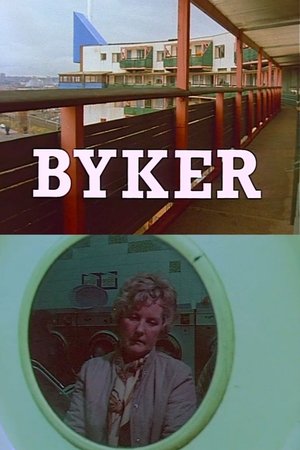


A partly dramatised documentary built around Sirkka-Liisa Konttinen’s photographs of the Newcastle terraced community, demolished to make way for the Byker Wall. Konttinen, a founder member of the Amber collective moved to Byker when the group came to NE England in 1969. She lived there until 1976, when her own flat was demolished. The film reconstructed some of the contexts, which had already gone, creating a celebration of traditional working class culture that has been widely shown to community and general audiences, as well as in planning and architecture forums. Together with Keeping Time, the film was one of Amber’s early photo films. Others created around Konttinen’s photographs include The Writing in the Sand (1991), Letters to Katja (1994), Today I’m With You (2010) and Song for Billy (2016).
If a movie about a strange and crazy day is commercially successful, why not recycle it and double the kookiness quotient? That seems to be the logic behind this followup to Freaky Friday.
"La Noria" deftly subverts audience expectations as it explores childhood grief, anxieties, and pain. The award-winning short shows us that often our monsters are often sprung from our darkest places.
The development of existing characters and the addition of some new ones have surely placed 'Ted Lasso' on some sort of an Incluvie A-OK list.
Not a lot of people realize that being introverted is not always a permanent state of mind. Being considered an introvert by others is a complicated thing; not everyone likes being labelled “shy.”
Based on the legendary creature, the Chupacabra, this live-action movie brings an adventure to all.