




The Lack of Exposition Makes 'Fast Color' a Compelling Narrative on Repressed Personalities
That feeling in your gut which tells you that there’s something out there you should look for and make your own, is what the power represents

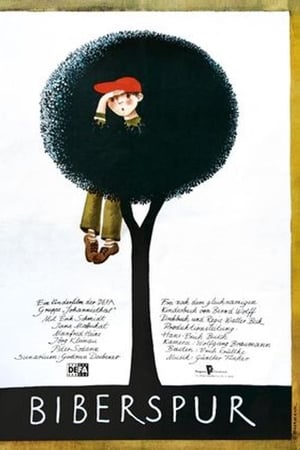
Twelve-year-old Joochen lives in a village on the Elbe. He finds a shot beaver and takes it to school with him. The animals are a protected species and he wants the culprit to be found. He also wants to impress the others a little, especially the girl Corina. However, his discovery is met with disinterest and he goes off on his own in search of the culprit. In the process, he makes friends with the hunter "Eule", his future brother-in-law. Joochen finds out that "Eule" has shot the beaver, turns away from him in disgust and reports him to the police. His stubborn behavior does not meet with the approval of the others, because "Owl" did not kill the beaver on purpose. Despite his dislike, Joochen suggests "Owl" as a chaperone for the school trip, but doesn't want to go himself. At the last minute, he decides to go after all and reconcile with "Owl".
That feeling in your gut which tells you that there’s something out there you should look for and make your own, is what the power represents
It doesn’t offer an absolute answer for the dialectical ethical questions that emerged in search of justice but portrays the characters as living people beyond the identities of victims.
It only seems to prove that when the company had their backs against the wall and needed an all pleasing, generic movie that had to make up for The Last Jedi, they chose to sacrifice almost everything that made their main protagonist interesting and that made her stand out as the strong female character that a generation of young movie goers was supposed to look up to. Instead, we were left with a Rey that was so much less than she could have been. And I guess that’s the real story of Rey and The Rise of Skywalker; they could have been so much more, but they were just more of the same.
Outer Banks (2020-) knows its audience: young adults in a country that can’t stop romanticizing good ole’ treasure hunts. Add a little of Riverdale’s (2017-) sex appeal, and no one can look away. Forty years after The Goonies (1985) America’s consciousness hasn’t strayed from the same tropes: treasure hunts, a vulnerable white male lead, and the whitewashing of a racially segregated setting.
Hanna Bergholm's 'Hatching' shows us that the modern version of the cardboard world trope is social media.
I was able to watch the gleefully mesmerizing Disney remake that was Robert Zemeckis’ Pinocchio. I was enthralled by Zemeckis’ iteration.