
Why "The Watermelon Woman" is Just as Powerful 30 Years Later
This movie will always resonate with queer people, for as long as queer people exist.
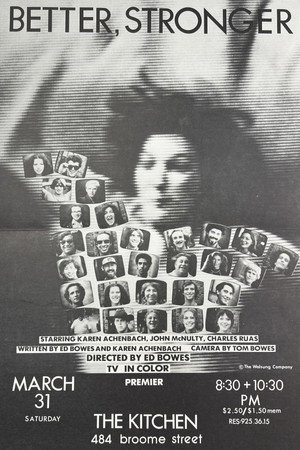


BETTER, STRONGER stands in contrast to the lilting pace of ROMANCE. It begins with an intense monologue by its main character, Lana (Karen Achenbach), which continues at a fairly relentless pace throughout. It is not a seductive story like ROMANCE, but an aggressive one that often jabs and pokes at the audience. Lana’s character is a high-energy, talkative actress who has returned to New York from California for a brief visit. She visits her family and cousins, who are a rowdy and obnoxious bunch, and storms from one scene to another. […] Bowes made BETTER, STRONGER as an artist-in-residence at the Television Laboratory at WNET/Thirteen. The tape is distinguished by its preoccupation with and relentless poetic use of language. […] While BETTER, STRONGER, like ROMANCE, would seem to have a direct plot line, Bowes has structured the action loosely with no central crisis or resolution. — Marita Sturken, “Television Fictions: An Interview with Ed Bowes,” AFTERIMAGE (May 1986)
This movie will always resonate with queer people, for as long as queer people exist.
Miley Cyrus shares her struggles as a songstress with a young audience, all while staying upbeat for the Disney brand.
The film's storylines read as allegories for the queer experience and that's a source of solace for LGBTQIA+ fans!
Mariah Carey's "All I Want for Christmas Is You" is an iconic family favorite with a multi-talented biracial lead that will remain fresh and magical for years to come.
The way Jeannette has to deal with child neglect makes her insecure about her parents and how she was brought up and raised in the United States. This continues into adulthood, where Jeannette becomes a successful journalist and is frequently asked about her parents by others.
In Saudi Arabia, a little girl (Wadjda) is told she can't have a bike because she's a girl. Wadjda struggles to obtain a bicycle to race her friend, Abdullah, due to the gender inequality and cultural norms of Saudi Arabia.