


Wolfwalkers Deserves More Acclaim Than Luca For Pride Awareness Through A Metaphor
It is the attention to detail that makes Wolfwalkers resonate more than Luca for Queer representation
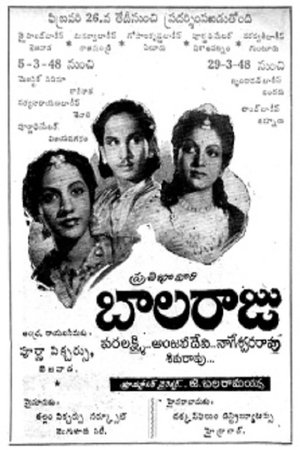


The story begins in heaven a Devakanya Mohini and a Yaksha are in love. Indra, the ruler of Suvarloka, has an interest in Mohini. His emissary Kubera, unable to separate the lovers, curses Yaksha to be born as a human. Mohini refuses to bow to the wish of Indra, who then curses her to be born as a human and pine for her lover. The Yaksha, now Balaraju, is brought up by a shepherd. Mohini is found in a field by Kamma Naidu, who names her Sita and brings her up. As she grows up, pressure mounts on him to perform her marriage. Fearing that the wealth he had acquired after her arrival may disappear if she leaves him, he refuses to get her married and keeps her in a solitary tower in a forest.
It is the attention to detail that makes Wolfwalkers resonate more than Luca for Queer representation
The Olivia Wilde renaissance is upon us.
The 1950s lesbian romance is stunning, emotional, restrained, and, simply put, one of the best movies I’ve ever seen depicting a woman-loving-woman (WLW) relationship.
While this film thinks that it is diagnosing the cause, it is merely diagnosing a symptom instead.
You can’t talk to my grandpa about The Sopranos. You can’t talk to him about The Godfather either. Merely by bringing up the subject, you’d be treated to a lecture on how movies and TV want you to believe that all Italians are criminals and mobsters. He won’t watch any of it, in protest.
Set in a future dystopian United States in which water is running out, Julia Hart’s Fast Color (2018) is a refreshingly different take on the superhero film.