












Dead Poets Society Steals a Queer Story
Dead Poets Society relies on patriarchal tropes such as overbearing fathers, contrived brotherhood, and faux-individuality in order to portray its straight white male characters as oppressed.
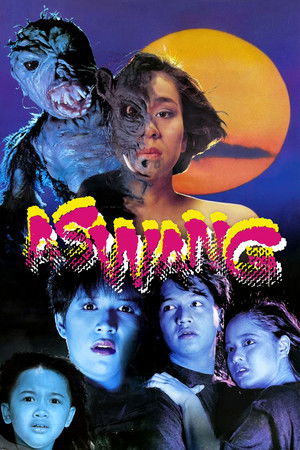


This Filipino vampire film co-directed by Peque Gallaga and Lore Reyes tells the story of an aswang, the traditional shape-shifting creature of local legend. Here, the vampire makes appearances as a giant snake, a young woman (Alma Moreno), and a withered old hag (Lilia Cuntapay). The aswang has a lengthy cinematic history, having been the subject of the first sound film ever produced in the Philippines (1932's Ang Aswang) and migrating, in somewhat altered form, to films in Hong Kong, India, Japan, and, in 1994, to the United States. Aiza Seguerra co-stars with Janice de Belen, Aljon Jimenez, John Estrada, and Alma Moreno.
Dead Poets Society relies on patriarchal tropes such as overbearing fathers, contrived brotherhood, and faux-individuality in order to portray its straight white male characters as oppressed.
One Night in Miami... did not frame the racism and bigotry as something that could be solved by quality time spent between individuals. Instead, it featured four different legends of Black History together in one room disagreeing for about 2/3 of the film.
The sequel to the 2010 live-action movie focuses on sibling rivalry.
Sam Levinson's latest film can't keep up with the excellence of its performances.
This is a list of seven films that explore police brutality and systemic racism made by Black filmmakers. These are important movies to watch and to take in, as — through the power of cinema — they showcase what it feels like to be a Black person living in a country that is internally designed to be against you.
The concept of male fragility is explored (interestingly, by a male director) in The Sun Never Sets