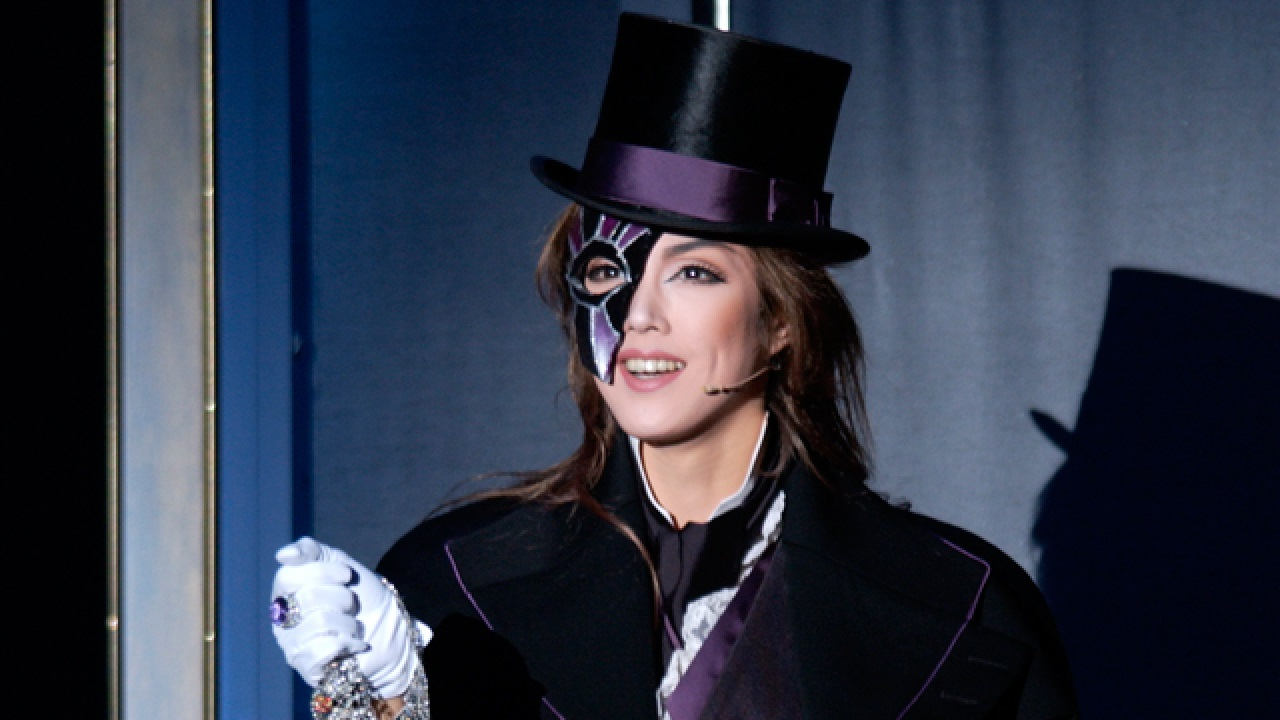

A/L -The Younger Days of Phantom Thief Lupin-
19th-century Paris. At a certain aristocrat's home, the theft of a necklace occurs. Because of this a maid and her son Raoul are turned out of the house; ten years later, he has become a prodigy at Sorbonne University and is popular around the city. The nanny who has been looking after him, Victoire, is an author; her novel The Gentleman Thief becomes a best-seller and the protagonist Arsène Lupin is loved as an idol by the people. But the book is prohibited from sale, and in order to save his aunt and to have his revenge on those responsible for the earlier incident, Raoul hits upon the idea of becoming Arsène Lupin. He once again meets Agnes, whom he served in the aristocrat's home, and together they realize their love for each other.

- / 5
PopScore
Representation
Pictures and Videos

Movie Information
19th-century Paris. At a certain aristocrat's home, the theft of a necklace occurs. Because of this a maid and her son Raoul are turned out of the house; ten years later, he has become a prodigy at Sorbonne University and is popular around the city. The nanny who has been looking after him, Victoire, is an author; her novel The Gentleman Thief becomes a best-seller and the protagonist Arsène Lupin is loved as an idol by the people. But the book is prohibited from sale, and in order to save his aunt and to have his revenge on those responsible for the earlier incident, Raoul hits upon the idea of becoming Arsène Lupin. He once again meets Agnes, whom he served in the aristocrat's home, and together they realize their love for each other.
Rating:
Genre:
Written By:
In Theaters:
Box Office:
Runtime:170 minutes
Studio:







Articles You May Like
Asha's 'Wish' (2023)
Asha, the main character, is a biracial woman who discovers the power of magic wishing dust.
"Outerlands" Provides Community in Unexpected Places
Intergenerational friendships and community can be so powerful, and this was a great example.
Fall in Love With Anna Biller's 'The Love Witch'
“I’m always interested in exploring female fantasy, and the sexy witch is a loaded archetype that is simultaneously about men’s fears and fantasies about women, and women’s feelings of empowerment and agency. So whereas we are used to seeing the sexy witch or the femme fatale from the outside, I wanted to explore her from the inside.” - Anna Biller, on why she made The Love Witch
The Shrew Has Been Tamed in The Devil Wears Prada 2 (2026)
My review’s title is a nod to Shakespeare and is entirely deliberate. The original movie portrayed the high-end fashion world as a brutal arena of plotting, backstabbing, and betrayal, and most Shakespeare’s plays depend on these plot devices. The Devil Wears Prada 2 uses the same formula, and is, plot-wise, almost identical. Once again, we plunge into the cutthroat world of Runway, where to get and stay at the top, you must let go of your principles and moral sense. The only thing different is that due to the digital era, Runway is not a print magazine anymore, but one that is running online.
Sonic the Hedgehog 2 has been Unleashed
A smashing sequel to the first Sonic the Hedgehog film that also brings back elements from the popular video game series.