

“Forbidden Fruits” (2026)
Not every film can make a shopping mall feel both magical and menacing, but Forbidden Fruits challenges that.
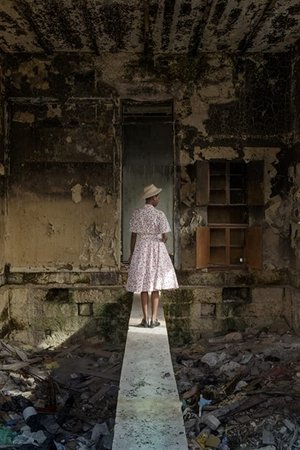


Auto Da Fé is a diptych that looks at migration through the lens of religious persecution. Presented as a poetic period drama, the film presents a series of eight historical migrations over the last 400 years, starting with the little known 1654 fleeing of Sephardic Jews from Catholic Brazil to Barbados. As the film develops, we are presented with tale after tale of populations being displaced along religious lines, right up to the present day migrations from Hombori, Mali and Mosul, Iraq. Religion, persecution and migration are, it seems, old and continuing bedfellows. The work was filmed on location in Barbados, but the landscape is deliberately anonymous, reflecting the universal nature of these stories.
Not every film can make a shopping mall feel both magical and menacing, but Forbidden Fruits challenges that.
Striving for validation. Let’s be frank….we ALL want to be successful. Whatever we put our efforts into, ideally it is to make it culminate in the best possible results across the board, especially when it comes to what career path we are pursuing. We WANT to excel, to shine, to advance, to be acknowledged. AND…let’s hope that we also wish to better everyone around us to boot. However, what occurs when those whom we initially put our trust in suddenly become a burden instead of a boon? Do we falter under the weight of rejection? Or STAND UP for WHO WE ARE?
But what many do not know is that in 2019, a Wonder Woman film was released that had all of the positive qualities of WW84, and remedied many of the negative ones. Wonder Woman: Bloodlines, a direct-to-video animated movie in the DC Animated Movie Universe, perfectly balances the campiness and seriousness of the character.
The makings of a great midseason filler episode that would connect in many different directions. This is a police drama filler with a guest director.
Throughout Brendan Fraser’s career, he has played a plethora of unique, layered characters who explore the importance of not being afraid to display your emotions, something that is often seen to not be a masculine trait. This idea of regulating emotion and what traits men are able to possess creates a toxic atmosphere for men who are often told they should not cry or represent their emotions in any physical way. These characters represent that men can be joyful, emotionally conscious, and sensitive, while also representing their masculine identity instead of painting those qualities as fighting against their masculinity.
'Living' dives into many themes that we can all understand regardless of our cultural backgrounds. We can see this through the shared similarities between 'Ikiru' and 'Living'.