

'Pain Hustlers' (2023): An Opioid Crisis
What starts off as a success story for a single mother living below the poverty line, slowly begins to weave itself into a tangled web of greed, guilt, and destruction.
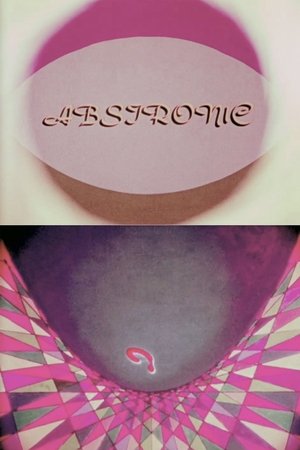


A pioneer of visual music and electronic art, Mary Ellen Bute produced over a dozen short abstract animations between the 1930s and the 1950s. Set to classical music by the likes of Bach, Saint-Saëns, and Shoshtakovich, and replete with rapidly mutating geometries, Bute’s filmmaking is at once formally rigorous and energetically high-spirited, like a marriage of high modernism and Merrie Melodies. In the late 1940s, Lewis Jacobs observed that Bute’s films were “composed upon mathematical formulae depicting in ever-changing lights and shadows, growing lines and forms, deepening colors and tones, the tumbling, racing impressions evoked by the musical accompaniment.” Bute herself wrote that she sought to “bring to the eyes a combination of visual forms unfolding along with the thematic development and rhythmic cadences of music.”
What starts off as a success story for a single mother living below the poverty line, slowly begins to weave itself into a tangled web of greed, guilt, and destruction.
Chickenhare and the Hamster of Darkness explores true identity through exploration.
Taylor Swift details her successful music career in country and pop genres in this featured documentary film Miss Americana.
The Djinn is about childhood traumas and lifestyle changes. It tells the story of Dylan (Ezra Dewey), a mute boy who blames himself for his mom’s death. He also condemns himself for being speech-impaired, and he thinks that if he did not have that condition, everything could had been different.
I love The Last Jedi. I don’t think there has been a Star Wars movie in quite some time that brought something new, something fresh to the table.
In 'Little Boxes," an interracial family moves to an all-white town where they face the judgement of others who have never been exposed to people of color before.