









Halt and Catch Fire's Trailblazing Queer Representation
It was always people for Joe, and he ultimately found them at the end of a long, painful, yet illuminating quest for self-discovery outside of one, confident constant - his bisexuality.
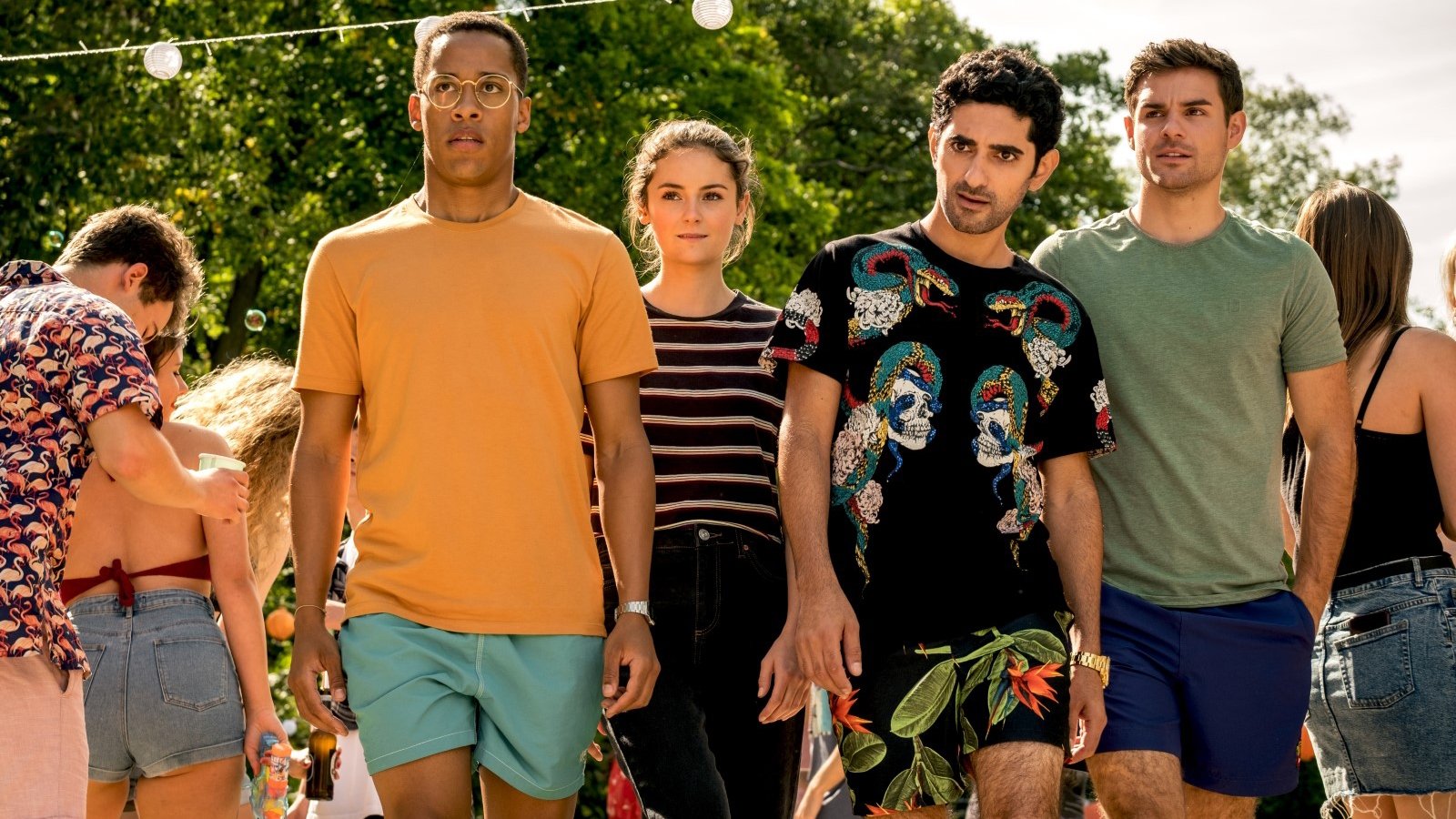



The four friends Musti (Reza Brojerdi), Hannah (Lea van Acken), Yannick (Jerry Hoffmann) and Tom (Lucas Reiber) could not be more different. But they have one thing in common: They are all pretty nerdy misfits who only just survived school thanks to their mutual support. For graduation, they want to prove it to everyone and promise nothing less than the craziest party of the year. However, the closer the legendary party gets, the more the friends realize that there seems to be something between them. Be it unspoken feelings, hurt pride or fear of the future. When the big day of the party finally dawned, the four of them were no longer just about celebrating, but about saving what is most important to them: their friendship!
It was always people for Joe, and he ultimately found them at the end of a long, painful, yet illuminating quest for self-discovery outside of one, confident constant - his bisexuality.
“Candyman ain't a 'he.’ Candyman is the whole damn hive." Candyman represents all Black victims of white supremacy, and this art form narratively conveys it in a succinct, adulatory way, the history of which is rare to find.
This is ambitious horror filmmaking, and in a lot of ways, I fully admire its ambitions. For me, the film’s sloppiness defines its overall quality.
The power to function. As people, we are richly blessed to have the wide ranging scope of what we can accomplish…physically and mentally…that aid in everything we desire to strive for and, ideally, accomplish. However, what if someone was experiencing daily life with these elements….only in a more muted manner?
Adapted from a 2014 novel by Atticus Lish, Preparation for the Next Life is the feature film debut of documentary filmmaker Bing Liu. With the help of screenwriter Martyna Majok, he paints a realistic and somber portrayal of Aishe, a Uyghur immigrant, as she struggles to make a living while undocumented in the United States.
Portraying how easy it is to be an ally heavily benefits the majority audience. The more we encourage it, normalize it, and give people the tools to become one, the sooner we can co-exist peacefully.