
Trans Allegories in Film: 'Your Name' (2016)
Our protagonists perform as the opposite gender while still preserving the parts of their personalities that makes themselves who they are.
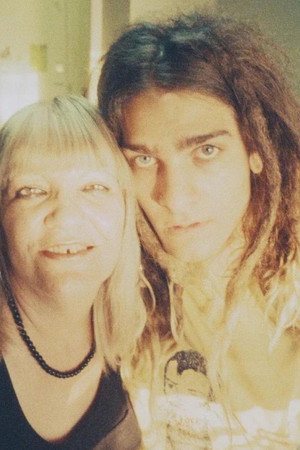


Filmed over the course of seven years, the photographer Abdulhamid Kircher evolves as his subjects shift from strangers he meets on the streets in New York, to Californian nature, to self and his family in Berlin. His diaristic work becomes a reckoning of masculinity, heritage, and sense of belonging when he addresses his fractured relationship with his father; the film follows the years building to the release of his first monograph, 'Rotting From Within’ in 2024.
Our protagonists perform as the opposite gender while still preserving the parts of their personalities that makes themselves who they are.
In Spike Lee’s She’s Gotta Have It (1986), we follow the love life of powerful female protagonist Nola Darling (Tracy Camilla Johns) and explore the relationship dynamics she has with her partners. She sees three men simultaneously: Greer Childs, (John Canada Terrell) Mars Blackmon (Spike Lee), and Jamie Overstreet (Tommy Redmond Hicks). Though an 80’s film, She’s Gotta Have It is surprisingly progressive with its themes of female sexuality, although at some points in the film it is handled clumsily. Overall Nola is an incredibly compelling character especially for modern women, as we as a society acknowledge female sensuality more and more without the negative stigma.
It is the attention to detail that makes Wolfwalkers resonate more than Luca for Queer representation
Apatow’s latest film, The King of Staten Island, is no different. The movie tells the story of Scott (Pete Davidson), the 24-year-old son of a deceased firefighter who passed away when Scott was 7
Complex relationships between mothers and daughters are far from a new concept, whether the strain comes from abandonment, beliefs, or trauma. In My Only Wish, an Incluvie Film Festival submission, Brenda Gutierrez’s take on her character’s maternal divide comes in the form of abandonment.
For the entirety of Raiders of the Lost Ark, Marion remains in full control of both her body and her personality, a rarity for female characters at the time of the film’s release. She’s granted depth with personal demons from her past and emotional vulnerability when the situation deems it appropriate for her to grow alongside Indy. She avidly rejects the notion of being anything other than a sassy, humane rebel, and Indy’s equal in every way. This she does while still maintaining her femininity.