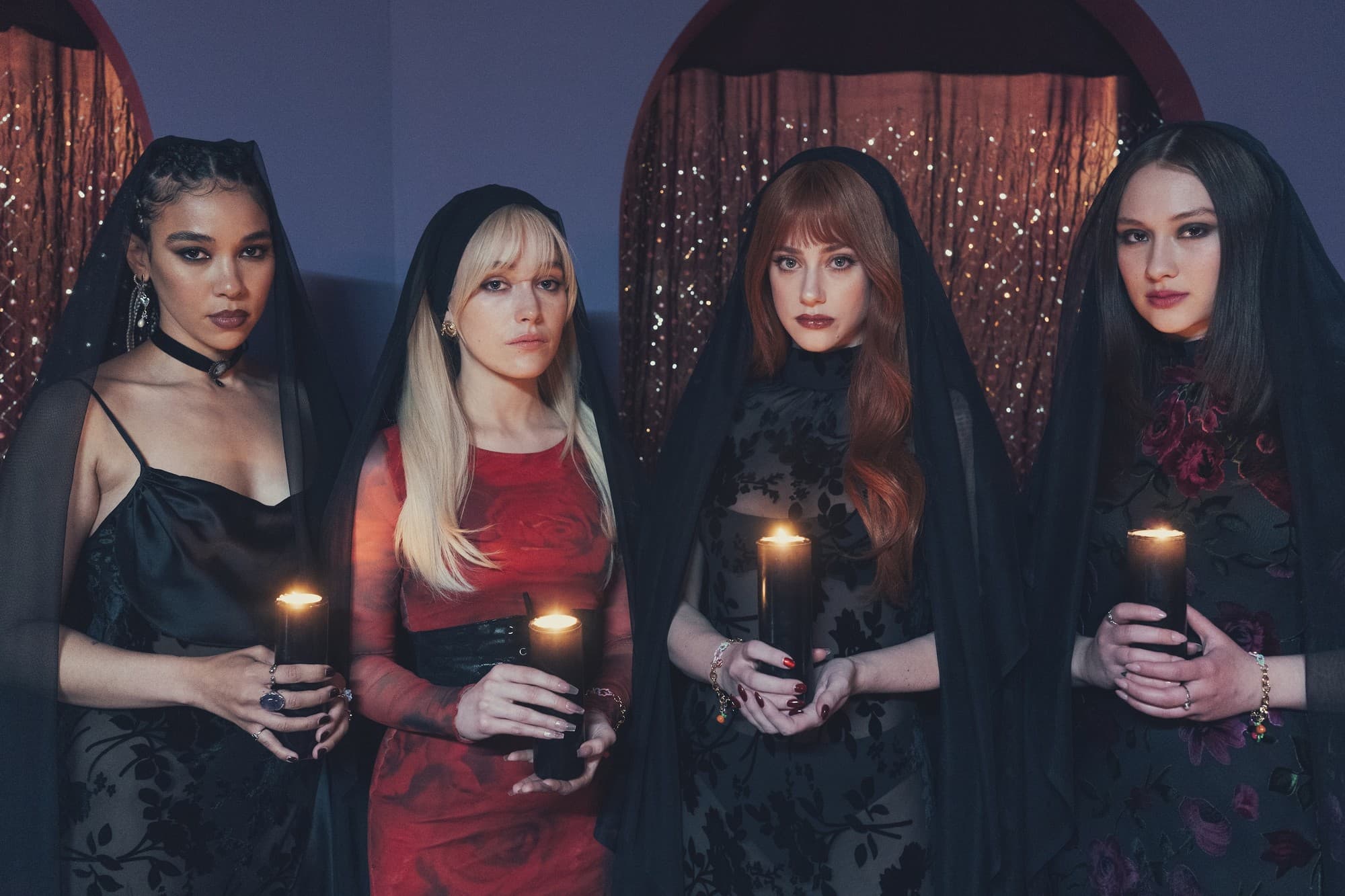
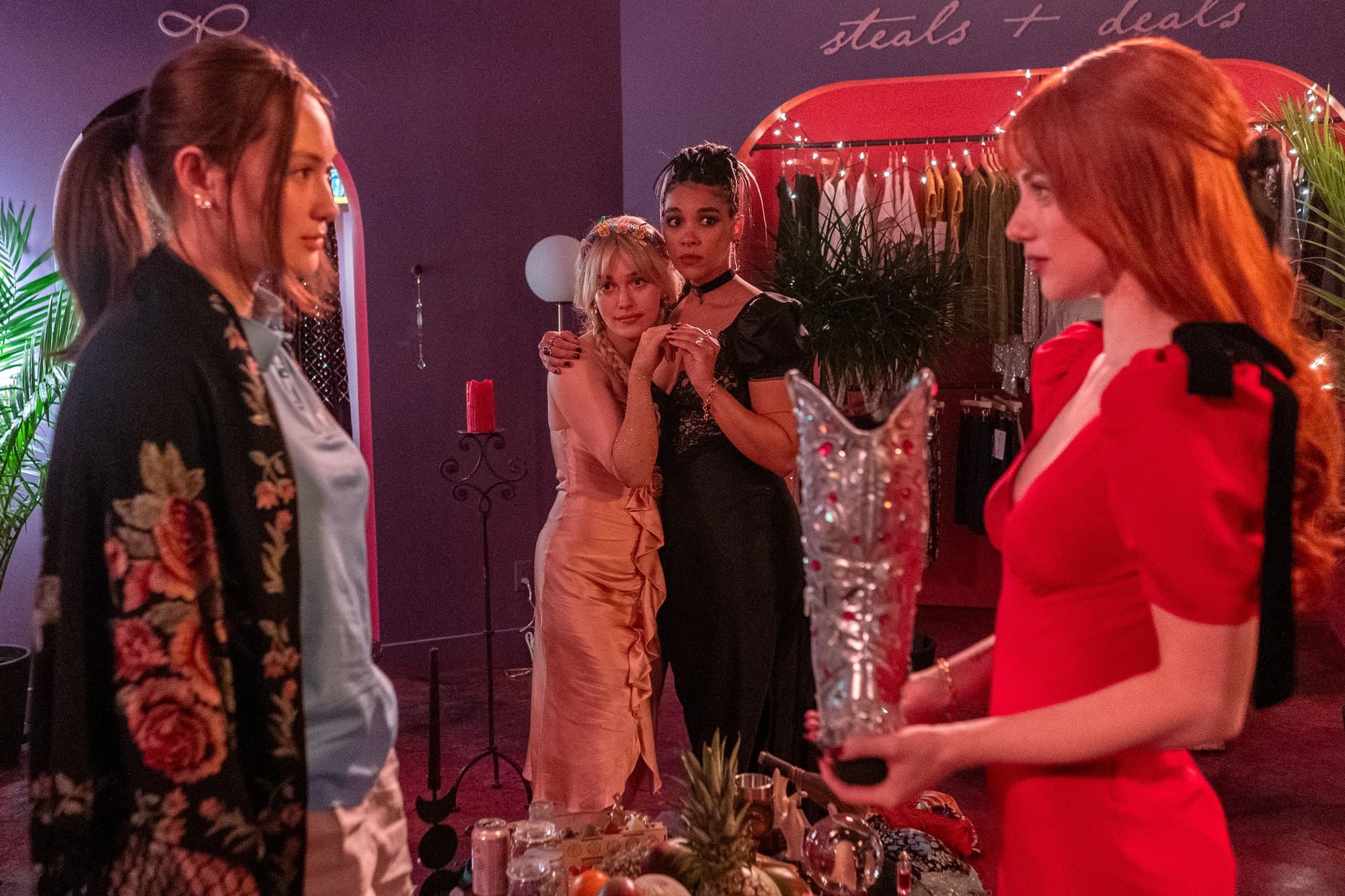
Not every film can make a shopping mall feel both magical and menacing, but Forbidden Fruits challenges that. Directed by Meredith Alloway, Forbidden Fruits is a stylish, strange, and campy horror-comedy that blends witchcraft, consumer culture, and female friendship into a colorful but uneven experience. Set inside a Texas shopping mall, the film follows Apple (Lili Reinhart), Cherry (Victoria Pedretti), and Fig (Alexandra Shipp), three retail employees who secretly operate as a coven. However, when newcomer Pumpkin (Lola Tung) joins, buried tensions begin to surface, threatening sisterhood and their constructed world.
What follows is a series of bizarre rituals: confessing their sins to the spirit of Marilyn Monroe, feeding new member Pumpkin a concoction of juice and blood, and abandoning her overnight in a locked store. Yet when they return, she is strangely transformed; more confident and with a new curiosity. As the months go on, Pumpkin begins to learn more about each girl by gifting them various items, unraveling the secrets they've been hiding, including the story of Pickle (Emma Chamberlain), a former member who left the coven for love. As everyone believes their secrets are safe, danger strikes, causing them to grow paranoid and accusatory of one another, leading to unsettling decisions. Backs are turned, truths are revealed, escape plans are made, hexes are cast, and the film delivers several brutal death scenes.
Visually, Forbidden Fruits is striking. The cinematography transforms the mall into a surreal landscape filled with glitter, fluorescent lights, and dreamlike imagery. The lighting is a key element, helping create an atmosphere that feels both nostalgic and unsettling. The soundtrack further contributes to the film's unique identity. Tracks such as "Scantily Clad" by Haute & Freddy and "POP GIRL" by Lexie Liu complement the film's 2000s grunge-camp aesthetic and overall costume design. The unique blend of fabrics, textures, shapes, and colors feels like an extension of the characters themselves and their personalities, which I particularly admired.
However, the film occasionally struggles under the weight of its many ideas. At times, I found it difficult to keep up with its attempts to explore friendship, power, consumerism, obsession, and female identity all at once, and not every theme receives the attention it deserves. The frequent shifts between horror, comedy, satire, and drama can make the narrative feel unfocused. While some viewers may appreciate its unpredictability, others may find it a bit "all over the place." Despite this, Forbidden Fruits offers a fresh take on the horror-comedy genre that feels both nostalgic and original.