Pretty Lethal (2026): When Ballet Turns Brutal
You've heard the phrase “If looks could kill,” but have you heard “If dancing could kill?” Pretty Lethal takes that idea and runs with it.



What makes a person different, and who is considered normal? The 2025 film The Unbreakable Boy, directed by Jon Gunn, is a complex film to dive into, as it attempts to expand mainstream representation of autism and disability. Based on a true story, the film follows the life of a young boy named Austin LeRette (played by Jacob Laval) who has autism and osteogenesis imperfecta which is also known as brittle bone disease.
It centers around Austin’s day-to-day life, blending diverse moments filled with sentiment with the people around him, specifically his dad, allowing people to see life through his eyes. The biggest contribution to representation is the choice to have a lead character whose life is rarely dramatized on screen. Austin’s combined physical and mental disability calls into question the film narrative that favors “normal” labels, encouraging viewers to question what constitutes being “normal” in their minds.
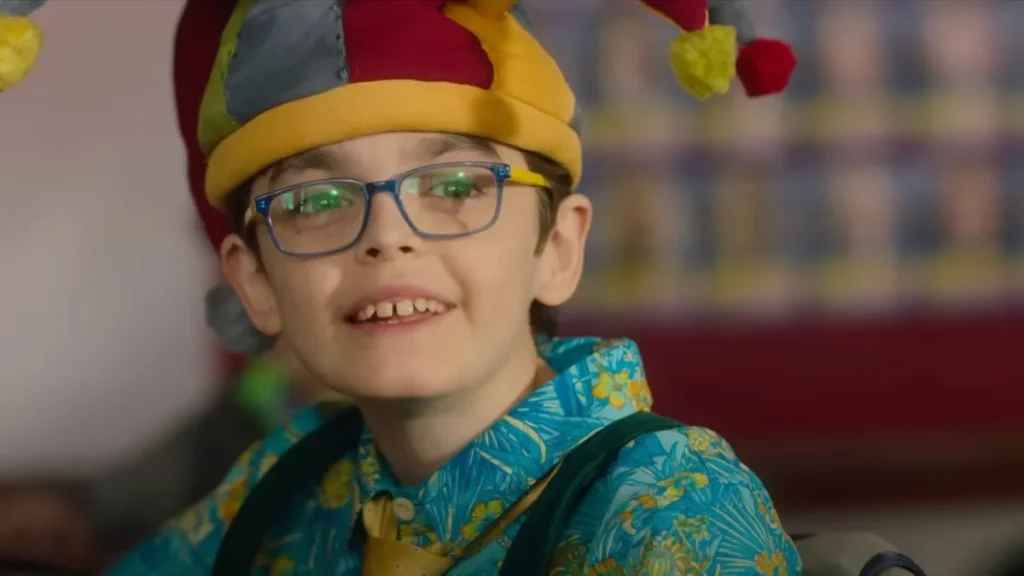
Austin is an inspiration, the light of people’s lives, simply changing someone’s day with a smile. Austin’s close relationship with his father Scott (played by Zachary Levi), anchors the film, revealing how care, frustration, and love coexist in navigating disability and parenthood. Thematically, this circles back to the idea that the differences in the world are things to be celebrated and allowed, not something to be feared or fixed. This overall uplifting tone is further reflected in the technical design of the film. The sound and color of the film work to immerse the audience in Austin’s sensory world, using heightened audio cues and warm, saturated visuals. However, some heightened sound cues cut through to reflect Austin’s sensory world and hint at the overstimulation most autistic people face. Throughout the film, Austin constantly rotates between hats which becomes a visual marker of his identity, signaling his desire for control, self-expression, and emotional regulation within an often unpredictable world. This tender detail adds personality and familiarity, particularly for viewers who recognize similar forms of imaginative self-expression.
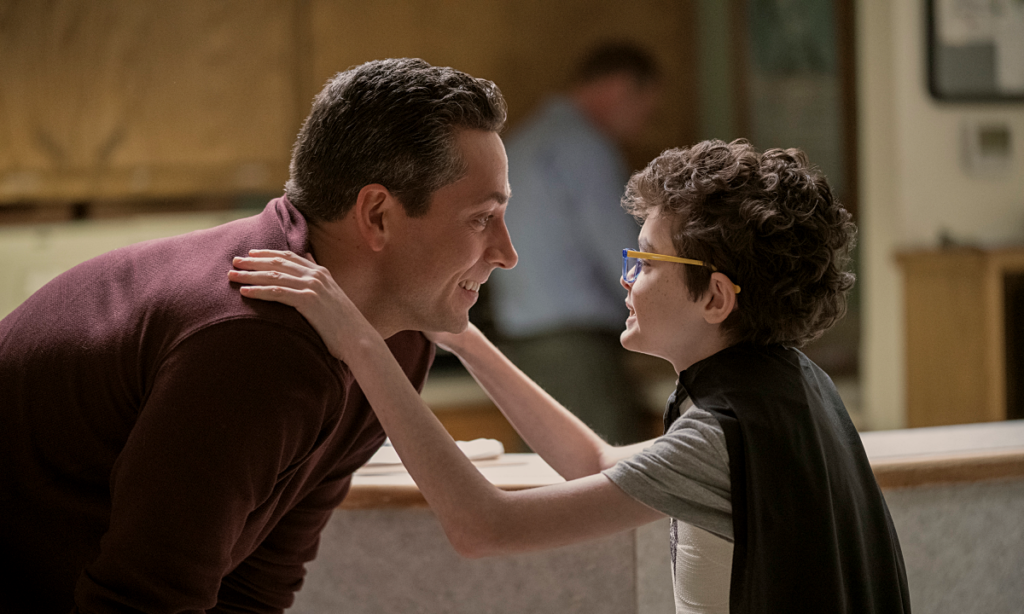
Despite facing physical limitations and social challenges tied to autism, Austin approaches every interactions with humor and resilience. Moments of rejection do not diminish his character; instead, they lift him up, highlighting his ability to find joy in everyday things. When questions of belonging arise, Austin remains hopeful, offering kindness. His actions and overall sense of self serve as an inspiration to those around him.
The Unbreakable Boy offers an important, if imperfect, reflection on disability representation that increases visibility for children with intersecting disabilities and encourages audiences to view the world in a new light. Through the characters’ ongoing struggles with acceptance, the film’s ending shows Austin and those around him continuing to live with joy, honesty, and optimism, reinforcing the idea that being “unbreakable” does not mean the absence of hardship, but the bonds that bring people together.