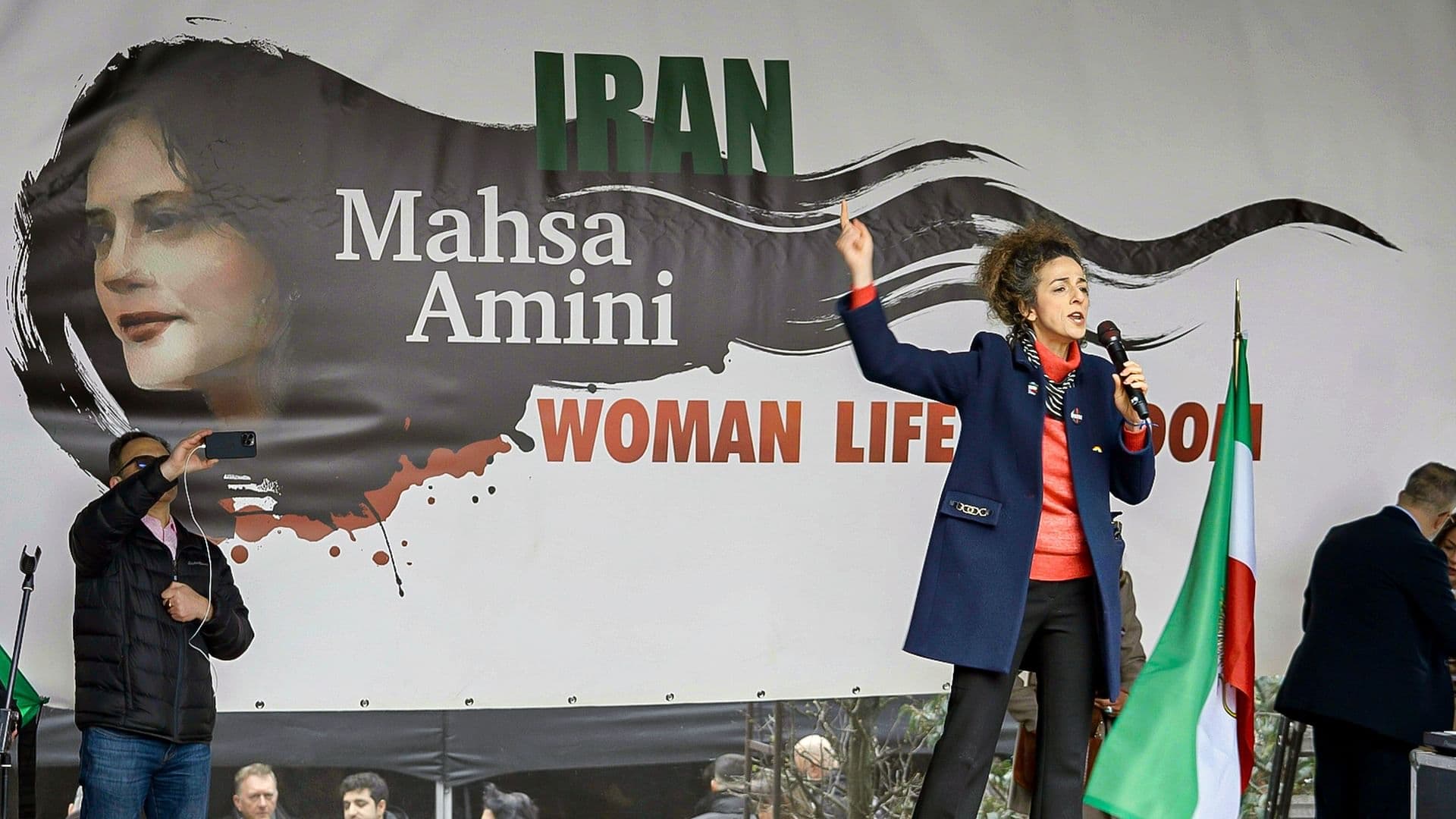

Woman, Life, Freedom: An Iranian Revolution
On September 16, 2022, in Teheran, the murder by police of the young Mahsa Amini, arrested for "wearing a headscarf contrary to the law", sparked off an unprecedented insurrection. Within hours, a spontaneous movement formed around the rallying cry: "Woman, life, freedom". For the first time, women, joined by men and students, took the initiative and removed their veils, the hated symbol of the Islamic Republic. The Iranian population, from all regions and social categories, rose up in protest. Social networks went wild. The diaspora (between 5–8 million Iranians) took up the cause, and the whole world discovered the scale of this mobilization: could the theocratic regime be overthrown this time?

- / 5
PopScore
Representation
Pictures and Videos

Movie Information
On September 16, 2022, in Teheran, the murder by police of the young Mahsa Amini, arrested for "wearing a headscarf contrary to the law", sparked off an unprecedented insurrection. Within hours, a spontaneous movement formed around the rallying cry: "Woman, life, freedom". For the first time, women, joined by men and students, took the initiative and removed their veils, the hated symbol of the Islamic Republic. The Iranian population, from all regions and social categories, rose up in protest. Social networks went wild. The diaspora (between 5–8 million Iranians) took up the cause, and the whole world discovered the scale of this mobilization: could the theocratic regime be overthrown this time?
Rating:
Genre:Documentary, History
Written By:Claire Billet, Mohamad Hosseini
In Theaters:
Box Office:
Runtime:53 minutes
Studio:Artline Films, ARTE, CNC
Cast



Articles You May Like
'The Dinner Party' — MiamisFF Review
A young woman finds herself trapped in a crossfire of awkwardness during a nightmarish dinner party with her boyfriend's dysfunctional family.
The Best Shots of the Heavy Metal Documentary, 'The Decline of Western Civilization Part II: The Metal Years'
The film is a documentary focusing on heavy metal in the late 80s and tackles topics like drug addiction, alcoholism, sex, masculinity, and of course, rock and roll. However, this didn’t feel like any documentary I’ve ever seen before.
A Bollywood Musical ‘Gangubai Kathiawadi’
A brave Indian woman rises from an oppressive background to become an inspired leader for women and men alike around the globe.
‘Outside the Wire’ Review: Netflix’s Latest Mediocre Sci-Fi Flick
Step deep into the 21st century and discover the complexities of artificial combat soldiers.
The Terminator: Lean and Mean Sci-Machine
James Cameron’s The Terminator (1984) marks the beginning of a wonderful two-part arc, brimming with style and substance. The film follows Sarah Connor, a waitress living in Los Angeles. One night, a cybernetic organism (Arnold Schwarzenegger) is sent back in time to kill Sarah. A human resistance fighter (Michael Biehn) is also sent back in time, with the intent of saving Sarah from this deadly foe.