
NYFF Review - 'The Inspection' Unearths Empathy in the Trenches of Bootcamp
The film exhibits a respect for the craft and an empathy for human tribulations that have historically been ignored.

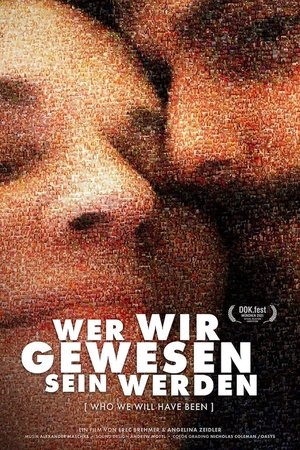


Filmmaker Erec Brehmer's world collapses when his longtime partner Angelina Zeidler dies in a car accident. Using personal videos, photos, voice messages, diary entries and music they shared, he creates ways of meeting and loving her again despite her absence. "We don't talk about the dead, even though that's the only thing we can still do" once someone is gone. And so, Who We Will Have Been is less a documentary and more a mode of communication with the deceased, where slow motion, reverse and soundbites taken in a totally different context suddenly give profound meaning and subtext. When Angi asks in a saved video "Am I still in time?" it resonates with deep, universal, spooky-action-at-a-distance significance. Do we still exist in time without a body and out of mind? Brehmer's powerfully emotional and absorbing meditation on living with loss recognizes that grief changes, but never really ends, like love.
The film exhibits a respect for the craft and an empathy for human tribulations that have historically been ignored.
Though 'Bound' technically falls under the genres of crime and thriller, the film's heart is a romance between two women.
Having Sersi be the central force in Eternals is unprecedented in its viewpoint and focus, from demonstrating a gentle type of leadership, to being overlooked in a group setting but succeeding in the goal at hand anyways, to having romantic options, to strength and integrity, and majority screen time - for a group that's given less screentime than aliens.
Haven't you heard? There's a new horror subgenre: cerebral gore, that's probably been around for decades and we're now just starting to talk about it.
Animation as a medium of storytelling can be thought to be open to all ages and as I hope my reading will reveal, 'Nimona' could be interpreted as a transgender story.
All in all, “Event Horizon” is a cinematic misfire, begging to be perfected in the future. While it possesses an array of admirable visuals, the film leaves much to be desired. If only we could see Anderson’s preferred cut, which featured more character development and tortuous imagery. In the meantime, I have a catchphrase for this film: In space no one can hear you snore.